

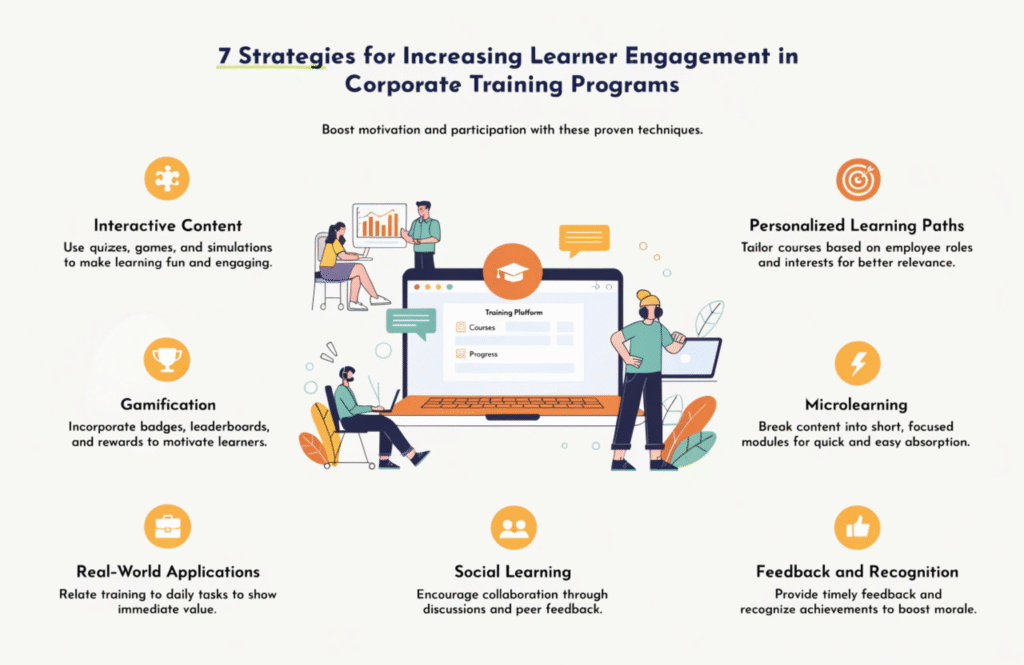
Engagement is not something that you add to a training program as an extra. It is an indication that shows you if the program is truly addressing a specific issue for the individual who is taking the training. If a learner is simply going through the motions in some modules to be able to say they are done, then the problem is not the content, but rather the strategic approach to it.
Start With a Skills Map, Not a Content Catalog
The most frequent error within corporate training is to choose courses before you know what your people need. Then, you get a library that nobody visits and managers scratching their heads about why nothing has moved the needle on retention.
Before you prescribe any content, do a skill gap analysis. Take stock of what your people can do versus what your organization needs them to be doing, not six months from now, but in the next quarter. Managers evaluating the best skills intelligence platforms will see that the latest solutions map that out for you, drawing on your assessments, performance data, and role profiles to show you exactly where the shortages are.
When a course is directly linked to a gap your person is showing in the real world, they don’t need motivating. They know why they’re there.
Replace Passive Content With Decision-Forcing Scenarios
While video lectures have their place, they don’t create a sense of competence on their own. You can watch a five-minute video of someone explaining a six-step process, but that’s a far cry from actually performing the process itself. Under pressure. With the clock ticking, and your boss, and the customer waiting.
Branching scenarios and real-time simulations put learners into that position and ask them to make a choice. See and feel the consequences. That rep isn’t sitting at a breakroom table watching a training video on a tablet, answering some multiple-choice questions at the end of it to certify for another state-mandated training hour. They’re facing an upset customer. Or not. And what they did or didn’t do leads directly to that next step. The consequences are immediate and real and directly experienced, therefore lessons are more deeply learned.
This isn’t new, by the way. This is what training accomplished. Video was just a way to cheap out on it.
Bring Training Into the Flow of Work
Training tends to discourage engagement when it’s treated as a distinct occasion. For instance, a different login, a different system, a time slot from an already tight schedule.
“Just-in-time learning” is effective because it adapts to the learners. When a tool or resource becomes available on Slack, Teams, or any other platform employees are currently using, their engagement increases. It’s not because the content is different, but because the barriers to access are removed.
Learning management systems that are part of the existing processes perform better than separate portals. If someone needs to search for a module regarding how to handle complex
performance conversations at 9 am before a meeting at 9:30, they will do it. On the other hand, they won’t if they have to remember a separate URL and password.
93% of organizations are worried about keeping their employees, and the primary strategy to achieve employee retention they are investing in are learning opportunities (LinkedIn Workplace Learning Report, 2023). But this investment is not beneficial if people are not able to use what has been created for them.
Make Learners Stakeholders, Not Recipients
Most training programs overlook the importance of feedback and consider it as an add-on, like a rating scale given to the users at the end of the training.
When users can provide feedback about the training that they think is incorrect or outdated they can suggest new content or examples, and rate the usefulness of the training module and that can lead to possible updates, they become invested in the outcome. This won’t just keep your users happy and motivated, it will keep your content accurate as well.
Continuous feedback loops don’t leave training managers digging through an insurmountable pile of data. If a training has constantly been rated poorly and dropped out steadily, it’s time to let go of that course.
Build Social Accountability Into the Structure
While digital modules can handle knowledge transfer quite well, they can’t handle accountability for learning at all. Peer-led coaching and mentorship fill that gap and research has consistently shown that completion and knowledge retention is higher when someone knows a colleague is going to ask them about what they learned, or when paired with a mentor who is tracking their progress. Social accountability isn’t a nice-to-have, it’s a documented driver of course completion. For this, it doesn’t need to be a fancy complex coaching program. Just having people be paired up, working in cohorts that move through content together, or having a monthly manager/direct report conversation about what they are learning can be enough. The point is only that learning isn’t a solo activity.
Personalization Isn’t Optional Anymore
Customized learning journeys are no longer an advantage. You can’t send the same compliance course to everyone and call it training. You’re managing risk. Real customization is when a plant manager and a marketing director look at their screens and see two totally different training paths that they are eager to complete.
Mobile-first design matters here too. Employees who work without a desk need training they can access on a phone, in short bursts, without losing their place.
Training programs that engage people aren’t magic. They’re built on relevance, the right content, for the right person, at the moment they actually need it.
