

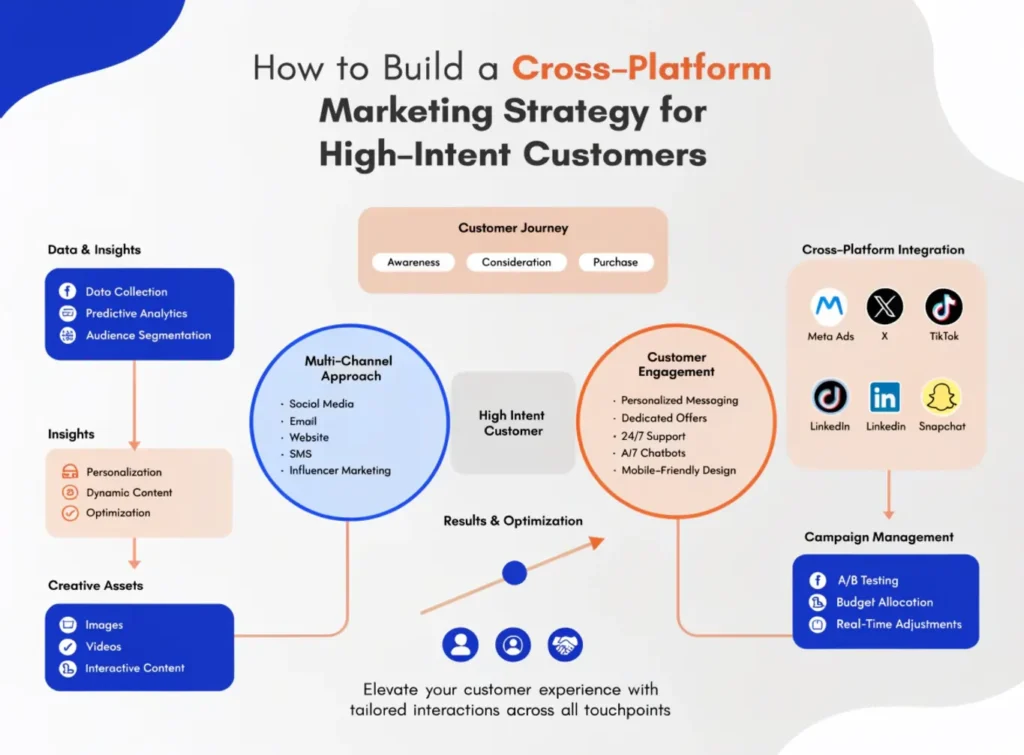
Customers with high intent are ready to make a purchase but haven’t decided from whom yet. This could be someone comparing your offer to a rivals, or tracking down the best place to buy in their area. These users are often regarded as the easiest to convert and essential for a successful campaign. Customers with high intent are most often reached with paid ads for obvious keywords.
Understanding The Device-Switching Moment
According to research by Google, 90% of multiple-screen users switch between devices to complete a task, using about three different combinations of devices per day. This statistic is important because it highlights the problem. A user stumbles upon your product on their laptop during lunch, becomes distracted, and then picks up their phone two hours later. If your solution doesn’t someway connect those two scenarios, you’ve lost that user to whomever else is out there.
Map the customer journey. Locate the exact touchpoints where your users are switching between devices – not theoretically, but based on your actual numbers. Check your session data by device type. Where are your users coming in? Where are they dropping off? Nearly 100% of the time it will follow the pattern of desktop as discovery and mobile as action.
Once you know the pattern, you can design for it, ensuring that users get another chance to take a shot, rather than hoping they come back on their own.
Building Creative Consistency Across Devices
Creative inconsistency is one of those things that quietly kills campaigns. Nobody talks about it enough.
You know the experience – you see a clean, product-focused ad on your desktop. Then later, on your phone, the same brand hits you with something cluttered and wall-to-wall text. It feels off. It is off. And that small moment of disconnect is enough to make someone pause, second-guess, and move on.
Start by nailing your visual identity across every format before you even think about targeting. The headline, the colours, the core value prop – these need to feel like they belong to the same campaign whether someone’s seeing a sidebar ad on their laptop or a full-screen takeover on their lock screen. Yes, the format changes. The message doesn’t get to.
Retargeting is where this matters most. If you’re running device ID or cookie-based remarketing to pull back someone who’s already visited a product page, what they see next needs to feel like a continuation. Like chapter two, not a cold call from a stranger. The moment it feels disconnected, you’ve lost the thread, and probably the sale.
Using Push Notifications As Connective Tissue
Emails may take time to check, social media can be filled with too many things that can distract users from your ad, and push notifications can bring your message directly to your audience on the device. For high-intent users who’ve already interacted with your brand – visited a pricing page, abandoned a cart, clicked a previous ad – push alerts deliver directly to the device they’re holding right now. That’s the format doing most of the heavy lifting in a well-built cross-platform sequence.
The implementation matters here. For Android users specifically, push ads android audiences receive can appear directly on the lock screen, which means visibility before the user has even opened an app. That placement, combined with a time-sensitive offer, gives you the urgency factor that display and search can’t replicate on their own.
Frequency capping is essential when you add push to the mix. Over-exposure turns a useful re-engagement tool into something users opt out of. Set exposure limits and build your sequences so each message adds something – a new incentive, a deadline, a different angle on the same offer.
Targeting Behavior, Not Demographics
Targeting users at the bottom of the sales funnel makes your cross-platform strategy more cost-effective. Instead of aiming broadly and hoping that high-intent users are included, you can screen for behaviors that indicate a readiness to buy: searches with “buy now” or “promo code”, visits to product pages lasting longer than 90 seconds, add-to-cart events without subsequent checkout.
In this, contextual targeting is a supporting strategy. Users who read comparison or review content are closer to making a decision than others who casually browse general-interest content. Placing ads in these environments links your brand to a relevant, in-market association without needing to track the user’s mouse.
A/B test the call-to-action elements of your ads by device. Desktop users typically have more time and space for a richer ad, with multiple product images, detailed specifications, and possibly some social proof. Mobile users are spur-of-the-moment; streamline and simplify the ad, paying attention to things like urgency (“Only 3 left”) that may not spur a desktop user who is sitting down and contemplating an actual plated screen.
Closing The Loop With Attribution
Attribution quietly breaks your reporting if you haven’t thought about it beforehand and most people haven’t.
The classic example is someone who taps a push notification on their phone, gets distracted, then comes back on their tablet and buys. Mobile gets no credit. Your organic numbers look great. You make decisions based on that and they’re off.
A basic linear attribution model already fixes most of this. It shows you what’s actually contributing, but more importantly it flags when someone has converted, so you stop retargeting people who’ve already bought. That’s a surprisingly common budget drain.
Throw conversion exclusion lists in and you’re only talking to people who genuinely haven’t purchased yet. Which is who you should be spending on in the first place.
High intent doesn’t last long either. Someone in buying mode moves fast. Cross-device attribution keeps you in the picture as they switch screens, so you’re still there when it matters before someone else gets there first.
