

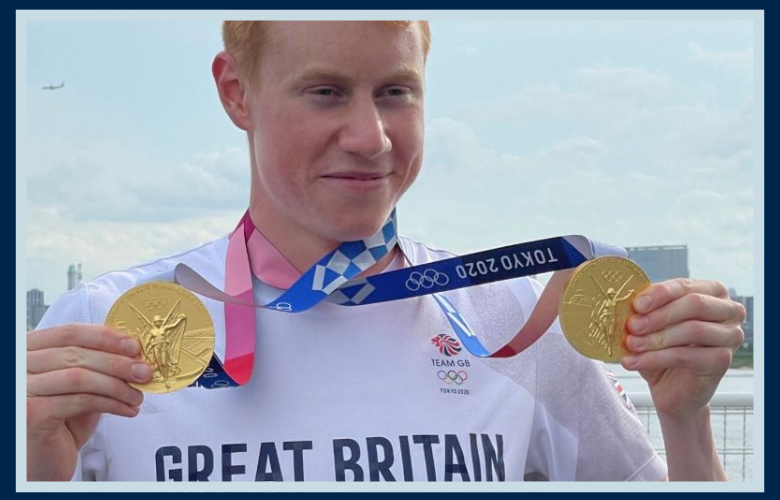
Tom Dean is one of the most successful British swimmers of the modern era. Known for his exceptional freestyle performances and calm determination under pressure, he has become a household name after winning multiple Olympic gold medals for Team GB. His journey from a talented youngster in Berkshire to standing on the top step of the Olympic podium is one of dedication, resilience and relentless hard work.
Unlike many athletes who enjoy instant success, Tom Dean spent years developing his skills, overcoming setbacks and learning from every competition. His story is about far more than medals. It highlights the importance of discipline, education, mental strength and perseverance. Whether you are a swimming fan, an aspiring athlete or simply interested in Britain’s sporting heroes, understanding Tom Dean’s journey provides valuable insight into what it takes to become a world-class champion.
In this comprehensive guide, you’ll discover Tom Dean’s early life, family, education, career milestones, Olympic triumphs, records, achievements and the qualities that continue to make him one of Britain’s most admired sports personalities.
Who Is Tom Dean?
Tom Dean is a British competitive swimmer who specialises in freestyle events, particularly the 200-metre freestyle, while also competing in medley races. Representing Great Britain at the highest international level, he has become one of the country’s most decorated swimmers.
His breakthrough came at the Tokyo Olympic Games, where he claimed the gold medal in the men’s 200m freestyle before helping Great Britain win another gold in the men’s 4×200m freestyle relay. Those victories transformed him into one of the biggest stars in British sport.
Beyond Olympic competition, Tom has earned medals at World Championships, European Championships and Commonwealth Games. His consistency, technical excellence and ability to perform under pressure have established him among the world’s elite swimmers.
Despite international fame, Tom is recognised for remaining grounded, professional and approachable. His humility has earned admiration from supporters, fellow athletes and coaches alike.
Tom Dean Quick Facts
| Detail | Information |
|---|---|
| Full Name | Thomas William Darnton Dean |
| Date of Birth | 2 May 2000 |
| Age | 26 (2026) |
| Birthplace | London, England |
| Hometown | Maidenhead, Berkshire |
| Nationality | British |
| Profession | Professional Swimmer |
| Primary Events | 200m Freestyle, 400m Freestyle |
| Club | Bath Performance Centre |
| Coach | David McNulty |
| Education | University of Bath |
| Olympic Titles | Multiple Olympic Gold Medals |
Early Life and Childhood
Tom Dean was born in London before growing up in Maidenhead, Berkshire, where he first discovered his love of swimming. Like many children, he initially entered the pool simply to learn an important life skill and enjoy recreational activities. However, coaches quickly recognised that he possessed exceptional natural ability.
From an early age, Tom displayed excellent coordination, determination and a competitive spirit. He enjoyed challenging himself against older swimmers and constantly sought ways to improve.
His childhood revolved around balancing education with intensive swimming training. While many children spent weekends relaxing, Tom often travelled across the country to compete in regional and national competitions.
Those experiences built confidence and taught valuable lessons about discipline, resilience and teamwork. Looking back, these formative years laid the foundation for the remarkable career that would follow.
Family Background
Behind every successful athlete is a strong support network, and Tom Dean has always credited his family for encouraging his ambitions.
His parents recognised his passion for swimming and supported his dream without placing excessive pressure on winning medals. Instead, they focused on helping him enjoy the sport while developing confidence and responsibility.
Elite swimming demands early mornings, strict routines and countless hours of training. Throughout his childhood and teenage years, his family made countless sacrifices to ensure he could attend competitions and training sessions.
Their encouragement helped Tom remain motivated during difficult periods when progress felt slow or injuries and illness threatened to interrupt his development.
Although he generally prefers to keep his personal life private, it is clear that family support has played a vital role throughout his journey to Olympic success.
Education and University Journey
One aspect that makes Tom Dean particularly inspiring is his commitment to education alongside elite sport.
He studied Mechanical Engineering at the University of Bath while simultaneously preparing for major international swimming competitions.
Balancing demanding academic work with multiple daily training sessions required exceptional organisation and dedication.
Many athletes choose to postpone education while focusing entirely on sport. Tom instead demonstrated that both ambitions could be successfully combined.
The University of Bath is internationally recognised for supporting elite athletes through outstanding sporting facilities, coaching expertise and academic flexibility.
Training alongside other Olympic hopefuls created an environment that encouraged continuous improvement.
His success in both education and sport proves that determination, effective time management and hard work can produce outstanding achievements in multiple areas of life.
Tom Dean’s Success After the Olympics
Winning Olympic gold changed Tom Dean’s career forever. After Tokyo, he became one of the biggest names in British swimming and an important ambassador for the sport. His achievements brought greater media attention, sponsorship opportunities and increased public recognition, but they also created new expectations.
Many athletes struggle to maintain their performance after reaching the top. Tom, however, continued to improve while remaining focused on long-term success rather than short-term fame. He returned to training with the same determination that helped him become an Olympic champion.
His ability to stay motivated after winning the sport’s biggest prize reflects the mindset of an elite athlete. Instead of becoming satisfied with past achievements, he continued working towards new goals, including World Championships, European Championships and future Olympic competitions.
This relentless pursuit of improvement has become one of the defining characteristics of his career.
World Championship Success
Tom Dean has also enjoyed an outstanding career at the World Aquatics Championships, competing against the fastest swimmers from around the globe.
The World Championships are widely regarded as one of the toughest competitions in swimming because they feature Olympic champions, world record holders and rising international stars. Performing consistently at this level requires exceptional preparation and mental strength.
Tom has helped Great Britain achieve success in relay events while also competing strongly in individual races. His performances have demonstrated remarkable consistency, showing that his Olympic victories were no coincidence.
Winning medals at both the Olympics and World Championships places him among Britain’s greatest swimmers. Very few athletes maintain elite performances across multiple international competitions, making his achievements even more impressive.
Training Routine Behind Olympic Success
Elite swimmers spend countless hours preparing for competitions that may last only a few minutes.
Tom Dean’s weekly training programme combines swimming, strength conditioning, recovery sessions and technical analysis.
A typical week includes:
- Multiple swimming sessions every day.
- Gym-based strength and conditioning.
- Cardiovascular endurance training.
- Mobility and flexibility exercises.
- Recovery through physiotherapy and sports massage.
- Video analysis to improve race technique.
- Nutrition planning for peak performance.
- Mental preparation and goal setting.
This balanced approach helps maintain fitness while reducing injury risk.
Modern Olympic swimming depends on marginal improvements. Even a tiny gain in efficiency can determine whether an athlete wins a medal or narrowly misses the podium.
