

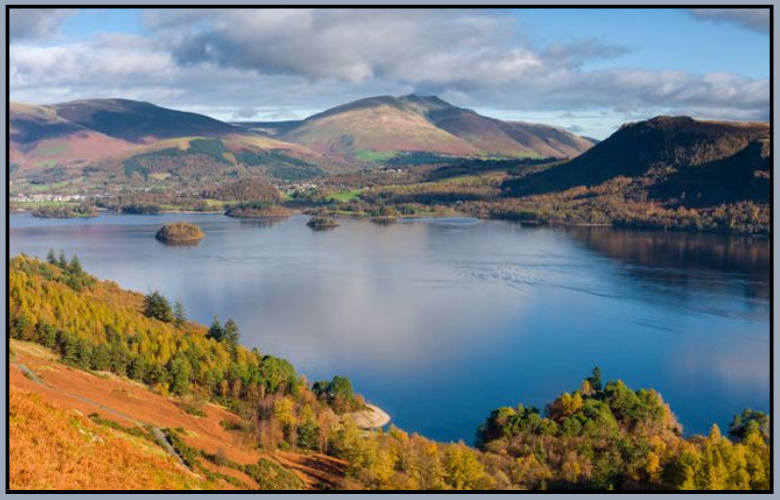
Lake District walks offer a choice between gentle waterside paths, shorter viewpoint climbs and demanding mountain routes. Tarn Hows is a useful option for a compact scenic circuit, Buttermere provides a longer lakeside outing, and Catbells rewards confident walkers with views over Derwentwater. Scafell Pike and Helvellyn belong on a more ambitious itinerary, where experience and preparation matter considerably.
Finding the right walk means comparing terrain as well as distance. A short route can include steep rock, while a longer shoreline path may involve less climbing. Your starting point, transport and the weather also influence how comfortably the day unfolds.
This guide covers popular routes around Keswick, Windermere, Coniston and the western valleys. It explains beginner options, circular trails, walking maps and guidebooks, helping you choose an outing that suits your interests and everyone coming along.
Best Lake District Walks
The best route depends on whether you want waterside scenery, a viewpoint or a sustained mountain challenge. The national park’s landscape includes wooded shores, open farmland and rugged fells, so nearby destinations can offer very different walking experiences.
Use this comparison to narrow your choices before studying a detailed route description.
| Walk | Area | Main attraction | Important consideration |
| Tarn Hows | Coniston and Hawkshead | Water, woodland and a shorter circuit | Check gradients and access details |
| Latrigg | Keswick | Views over Keswick and Derwentwater | The starting point changes the effort |
| Buttermere circuit | Buttermere Valley | Lakeside scenery beneath surrounding fells | Uneven ground and a rocky step |
| Catbells | Derwentwater | Ridge walking and elevated views | Steep, rocky sections |
| Rannerdale Knotts | Buttermere area | A compact hill outing | Difficulty varies by approach |
| Gummer’s How | Southern Windermere | Views above the lake | Rocky upper ground |
| Orrest Head | Windermere | A shorter climb to a viewpoint | Sustained uphill walking |
| Scafell Pike | Wasdale approach | England’s highest summit | Strenuous terrain and navigation |
| Helvellyn via Striding Edge | Glenridding area | An exposed mountain scramble | Requires appropriate experience |
| Fairfield Horseshoe | Ambleside and Rydal | A long mountain circuit | Significant ascent and high ground |
These descriptions assume reasonable conditions. Snow, ice, strong wind and poor visibility can substantially increase the demands.
Lake District Walks for Beginners
Tarn Hows, Orrest Head and the shorter Latrigg approach are sensible possibilities for beginners. Choose between them according to your comfort with climbing, mobility and available time.
The National Trust’s published Tarn Hows circular trail is approximately 2 miles, or 3.2 kilometres. It combines water and woodland with views towards surrounding hills, although it should not be described as completely flat.
Orrest Head involves more obvious uphill effort. Its published return route measures approximately 3.5 kilometres, making it useful for those who want a shorter climb.
Latrigg’s easier approach starts from the higher car park near the fell. Walking from Keswick adds distance and ascent. Always check the complete route rather than assuming every walk to the same destination requires equal effort.
Best Circular Walks in the Lake District
Tarn Hows and Buttermere offer contrasting circular outings. The first suits a shorter scenic walk, while the second provides a longer journey around a lake framed by fells.
Buttermere’s complete lakeshore circuit is approximately 4.5 miles, or 7 kilometres. Allow time for pauses rather than planning around a continuous brisk pace.
The Fairfield Horseshoe is another circular option, but belongs in a much more demanding category. Its sustained climbing and mountain terrain require experience and stamina.
When comparing loops, check total ascent, surfaces and exposure alongside mileage. “Circular” simply means that the route returns to its starting point. It makes transport easier to organise but does not establish that a walk is gentle, accessible or suitable for children.
Lake District Walks Near Keswick
Keswick is a useful base for exploring Derwentwater and nearby fells. Latrigg offers a viewpoint above the town, while Catbells provides a steeper outing across the lake.
Catbells involve rocky sections where you may need to use your hands. Consider how confidently everyone will manage the descent, especially when surfaces are wet.
For a lower outing, investigate individual shoreline sections around Derwentwater. Check the precise distance and terrain rather than assuming that a lakeside path will be level throughout.
Organise travel to the starting point before settling on a route. If using a boat or bus connection, confirm current operating arrangements and leave a comfortable margin for the return. A missed final service can complicate an otherwise straightforward day.
South Lake District Walks
South Lake District walks offer wooded paths, shorter climbs and viewpoints around Windermere and Coniston. Orrest Head, Gummer’s How and Tarn Hows provide useful choices with different demands.
Orrest Head suits visitors based in Windermere who want an uphill outing with a clear viewpoint objective. Choose a day with good visibility if the panorama is your main reason for going.
Gummer’s How overlooks the southern end of Windermere. Its compact approach is appealing when time is limited, although rocky ground near the top deserves care.
Tarn Hows, between Coniston and Hawkshead, provides a circuit with less emphasis on reaching a summit. Select one main outing and allow time to enjoy it instead of rushing between several trailheads.
Lake District Walks Near Me: Choosing a Local Route
Finding a nearby walk starts with your actual location and the precise starting point. A destination that appears close on a map may take longer to reach because roads follow valleys and pass around lakes.
Choose routes around the area where you are staying:
- Keswick: Latrigg, Derwentwater and access to nearby fells.
- Windermere: Orrest Head and routes farther south.
- Coniston or Hawkshead: Tarn Hows and surrounding countryside.
- Buttermere: Shoreline walking and nearby hill routes.
- Ambleside: Access to routes around Rydal and the Fairfield Horseshoe.
Confirm the journey, parking or public transport before leaving. A convenient route can give you more time outdoors and greater flexibility if the weather changes.
Lake District Walks Map: Planning Your Route
A suitable walking map should show paths, contours, streams and important landmarks. These details help you understand the ground and judge how much climbing the route involves.
Choose mapping that covers the complete outing, including the descent and possible alternatives. A small overview map may locate the destination without providing enough detail for navigation.
Read the map alongside a reliable route description. Check junctions, starting points and any sections involving rough or exposed terrain before departure.
Download digital mapping in advance, as mobile reception should not be assumed. For mountain routes, carry a suitable paper map and compass and know how to use them. Following a downloaded line does not replace understanding your position or making decisions when conditions change.
Lake District Walks Book: Choosing a Walking Guide
A good walking guidebook helps you compare outings before travelling. Choose one that matches your interests, whether those are beginner trails, circular routes, accessible paths or mountain walks.
Look for clear starting points, distance and ascent figures, terrain descriptions and realistic time estimates. Photographs are useful, but practical information should determine whether a route suits you.
Check the edition and publication details. Printed information may need supplementing with current access notices or transport information.
A guidebook is particularly useful for planning several days in one area. It can help you alternate harder outings with gentler ones and avoid unnecessary travel. Use it as a planning resource alongside a map, rather than expecting brief written directions to answer every navigation question.
Mountain Walks: Scafell Pike, Helvellyn and Fairfield
Scafell Pike is England’s highest mountain at 978 metres. The direct Wasdale approach still involves strenuous climbing, rough ground and navigation demands, particularly when visibility deteriorates.
Helvellyn via Striding Edge adds exposed scrambling. Confidence with heights, suitable skills and sound judgement matter as much as fitness. It should not be treated as a casual extension of an easy walking holiday.
The Fairfield Horseshoe offers a sustained circuit around the Rydal valley, commonly approached from Ambleside. Its cumulative ascent and high ground require stamina and careful planning.
For each route, assess the whole journey, including the descent. Choose according to your experience and the forecast, and consider qualified guidance when the terrain exceeds your current skills.
What Should You Take on a Lake District Walk?
Carry equipment suited to the terrain, duration and expected conditions. Even a shorter outing benefits from appropriate footwear, extra clothing and a clear return plan.
Useful essentials include:
- Footwear with grip suitable for the ground.
- Waterproof clothing and a warm layer.
- Enough drinking water, food and snacks.
- A charged phone and reliable navigation.
- A torch and basic first-aid supplies.
- A map and compass for mountain outings, with the skills to use them.
Check a mountain forecast before heading onto the fells. Tell someone your route and expected return time, and change plans when necessary.
In a mountain emergency, call 999 or 112, ask for the police, then Mountain Rescue.
Is a Walking Holiday in the Lake District Worth It?
A walking holiday is worth considering if you enjoy outdoor days and can adapt your itinerary. The variety of lakeside trails, woodland paths and fells allows you to balance different levels of effort.
Choose accommodation near your preferred walking areas. This reduces travel and makes it easier to select an alternative when conditions change.
Plan one main outing each day, with a shorter option available. Leave space for breaks, tired legs and places where you want to stay longer than expected.
A famous summit does not need to define the trip. A comfortable circuit can provide an equally satisfying day when it matches your interests. The strongest itinerary gives you enough flexibility to enjoy the landscape without rushing.
Frequently Asked Questions
What Is the Most Beautiful Walk in the Lake District?
There is no objective winner. Buttermere is a strong choice for water beneath surrounding fells, while Catbells offers elevated views over Derwentwater. Tarn Hows combines woodland and waterside scenery on a shorter circuit. Choose the landscape you enjoy, then check whether the terrain suits your ability.
Is Buttermere an Easy Walk?
Buttermere is relatively gentle compared with a fell ascent, but the complete circuit includes uneven ground, a short road section and a rocky step. Its approximately 4.5-mile distance also requires stamina. Check the exact route before assuming suitability for pushchairs, wheelchairs or anyone needing consistently smooth surfaces.
Are There Walks Suitable for Wheelchairs or Pushchairs?
Yes. The national park’s Miles Without Stiles collection helps visitors identify more accessible outings. Read each route’s details for gradients, surfaces, gates and restrictions. Suitability depends on both the path and your equipment, so avoid relying on a general “easy” label or extending onto neighbouring paths without checking.
Can You Go Walking Without a Car?
Yes, when you plan around available transport. Confirm the distance between the arrival stop and trailhead, along with the return timetable. Linear routes need particular care because they finish somewhere different from their starting point. Allow enough time for breaks and slower progress before the final connection.
When Is the Best Time to Walk?
The best time depends on the route and conditions. Longer daylight offers more flexibility, while winter requires more conservative planning and relevant skills where snow or ice is present. Check the forecast shortly before departure. Season alone cannot establish whether a mountain route is suitable that day.
Conclusion
The most rewarding Lake District walks combine scenery you want to explore with terrain you can manage comfortably. Tarn Hows and the shorter Latrigg approach provide useful starting options, while Buttermere offers a longer waterside circuit. Catbells, Rannerdale Knotts, Orrest Head and Gummer’s How introduce different amounts of climbing and rocky ground.
Scafell Pike, Helvellyn via Striding Edge and the Fairfield Horseshoe require more experience, preparation and attention to conditions. Their popularity does not reduce the demands of mountain terrain.
Before setting out, confirm the starting point, complete route, forecast and return arrangements. Use suitable mapping, carry appropriate equipment and keep an alternative available. An achievable plan leaves room for pauses and changing conditions, helping you enjoy the outing from the first steps to the journey back.
