

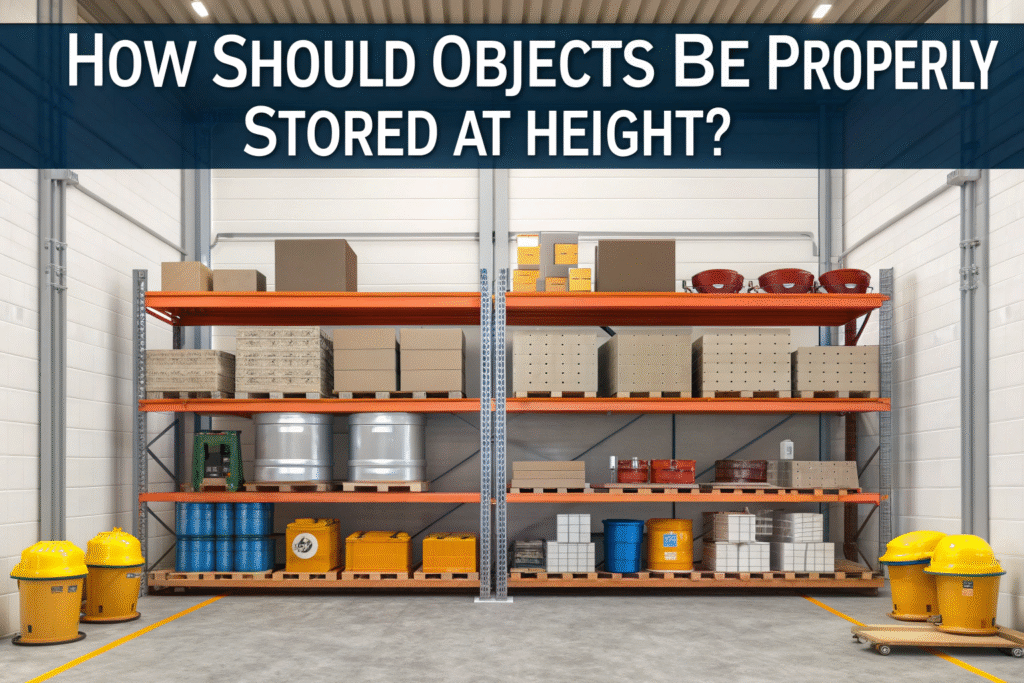
Storing items above head height frees space and keeps walkways clear, but you take real risks if you don’t do it correctly. If weight isn’t managed appropriately or you overload shelves, objects can hit someone below. You might then need to deal with downtime, stress and claims being made by employees who become injured, which can drain time and money. When you organise storage sensibly, you protect colleagues and give employees peace of mind as they work. But what is the correct way to store things at height? Let’s take a look.
Legal Requirements
UK law expects you to manage risks wherever people work above ground level or retrieve items stored high up. The Work at Height Regulations require you to provide safe access equipment and sensible procedures. The Provision and Use of Work Equipment Regulations expect you to maintain ladders, mobile steps and shelving so they remain secure. Inspect equipment regularly and record what you find. Fix loose bolts or bent frames quickly, because unstable structures collapse easily. Encourage staff to raise concerns so you catch problems early instead of waiting for an accident to reveal them.
Racking and Shelving
A rack designed for light packaging cannot safely carry solid metal components. So, keep heavier objects around chest height so people avoid excessive lifting above the shoulders – this strains muscles and increases the chance of a slip. Place frequently used stock where workers can reach it naturally without stretching on tiptoe. Label shelves clearly and remove clutter from aisles so you create a straightforward flow through the area. By arranging stock logically, you shorten retrieval time and reduce the urge to rush.
Risk Assessments
Walk the route workers take when accessing shelves and look for hazards such as uneven floors or turning points where someone might collide with a load. Speak to colleagues who fetch items often, as they notice real-world issues like awkward box shapes or shelves at an uncomfortable height. Review these risk assessments when stock changes or you add new equipment. Share your findings with the team so everyone understands the reasoning behind safety measures and feels involved in maintaining standards.
Safe Handling and Retrieval Procedures
Train staff to use stable access platforms and hold three points of contact while climbing. Encourage them to bring items down steadily and seek help with loads that feel bulky or heavy. Mechanical aids such as trolleys or small lifts reduce strain and prevent dropped objects.
A Safer Workplace Starts with Smarter Choices
Good storage at height supports a culture where people feel respected and protected. When you step back and look at how everyone interacts with shelves and stock each day, you gain a clearer view of what keeps your team safe. Small improvements help workers stay focused on the job rather than worrying about the risks above their heads. Over time, that confidence boosts morale and reduces avoidable interruptions. Treat safe storage as an ongoing commitment rather than a one-off task, and you build a workplace where everyone finishes their shift in the same good condition they started.
