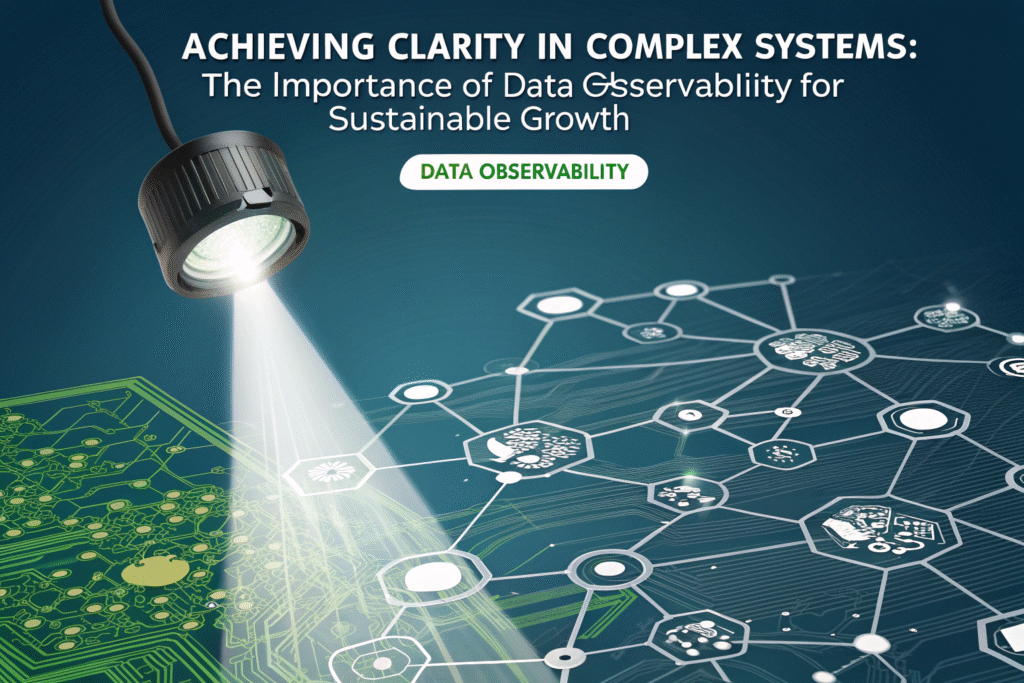

Organizations operate within increasingly complex systems. From supply chains that span multiple countries to digital ecosystems that incorporate various technologies and platforms, the complexity of business environments has grown exponentially. This complexity makes it challenging for organizations to achieve clarity in their operations, decision-making, and strategic planning. The ability to navigate these intricate systems effectively is crucial for sustainable growth.
To thrive in such an environment, organizations must harness the power of data. However, with an overload of information coming from various sources, the challenge lies in discerning actionable insights from this data deluge. This is where the concept of data observability comes into play. By establishing a strong foundation of observability, organizations can gain better visibility into their systems, allowing them to make informed decisions that drive sustainable growth.
The Role of Data Observability in Complex Systems
Data observability refers to the ability to understand, monitor, and analyze data within a system comprehensively. It goes beyond mere data collection and reporting; it involves having a clear view of how data flows through systems, how it is transformed, and how it impacts business outcomes. In complex systems where multiple components interact, data observability provides a lens through which organizations can gain clarity and insight.
Implementing data observability involves setting up tools and frameworks that allow organizations to track the behavior and quality of their data. This process includes monitoring data pipelines, identifying anomalies, and ensuring that data adheres to predefined quality standards. By doing so, organizations can quickly respond to potential issues, improve data-driven decision-making, and maintain a competitive edge.
Enhancing Decision-Making Processes
One of the most significant advantages of data observability is its impact on decision-making processes. In complex environments, decisions are often made based on incomplete or inaccurate data, leading to suboptimal outcomes. By implementing robust observability practices, organizations can ensure that decision-makers have access to high-quality, reliable data. This transparency reduces the risk of misinformed decisions and allows teams to act based on current and relevant insights.
Moreover, data observability empowers organizations to adopt a proactive approach to decision-making. Instead of waiting for issues to arise, teams can leverage observability to detect potential problems before they escalate. This capability not only enhances operational efficiency but also fosters a culture of continuous improvement. Organizations can learn from past mistakes, iterate on their strategies, and adapt to changing market conditions, ultimately contributing to sustainable growth.
Fostering Collaboration Across Teams
In complex systems, collaboration across different teams is essential for success. However, silos often emerge within organizations, preventing teams from sharing insights and data effectively. Data observability can act as a bridge between these silos, fostering collaboration and enhancing communication.
When teams have access to a shared understanding of data and its implications, they can work together more effectively. For instance, data engineers, data scientists, and business stakeholders can align their efforts towards common goals, leveraging data insights to drive initiatives. This collaborative approach not only improves the quality of decision-making but also encourages innovation. By breaking down barriers and promoting a shared vision, organizations can harness the collective intelligence of their workforce, leading to better outcomes.
Enabling Agility in Business Operations
In a world where market dynamics are constantly changing, agility is a crucial factor for organizational success. Companies need to adapt quickly to new opportunities and challenges, and data observability plays a vital role in enabling this agility. By providing real-time insights into system performance and data quality, organizations can respond rapidly to emerging trends, customer preferences, and competitive pressures.
For example, if a business identifies a sudden shift in customer behavior through data observability, it can adjust its marketing strategies or product offerings accordingly. This responsiveness not only helps organizations stay ahead of the curve but also enhances their ability to meet customer needs effectively. In turn, this responsiveness contributes to sustainable growth by ensuring that organizations remain relevant in a fast-evolving marketplace.
Driving Innovation and Continuous Improvement
Data observability is not just about maintaining the status quo; it also plays a crucial role in driving innovation. By gaining insights into data flows and system interactions, organizations can identify areas for improvement and innovation. This process involves analyzing data patterns, exploring new business models, and experimenting with different approaches.
Moreover, with robust observability practices in place, organizations can test new ideas and gather feedback quickly. This iterative process of experimentation fosters a culture of innovation, where teams feel empowered to explore new possibilities without the fear of failure. As organizations embrace innovation and continuous improvement, they position themselves for sustainable growth in an increasingly competitive landscape.
Navigate Complexity
Achieving clarity in complex systems is a multifaceted challenge that requires a strategic approach to data management. By prioritizing data observability, organizations can unlock the full potential of their data, enhance decision-making, foster collaboration, enable agility, and drive innovation. In an era where data is a valuable asset, embracing observability is not just a technical requirement; it is a strategic imperative for sustainable growth. Organizations that invest in data observability will be better equipped to navigate complexity, adapt to change, and seize opportunities for success in the future.
Achieving Clarity in Complex Systems: The Importance of Data Observability for Sustainable Growth