

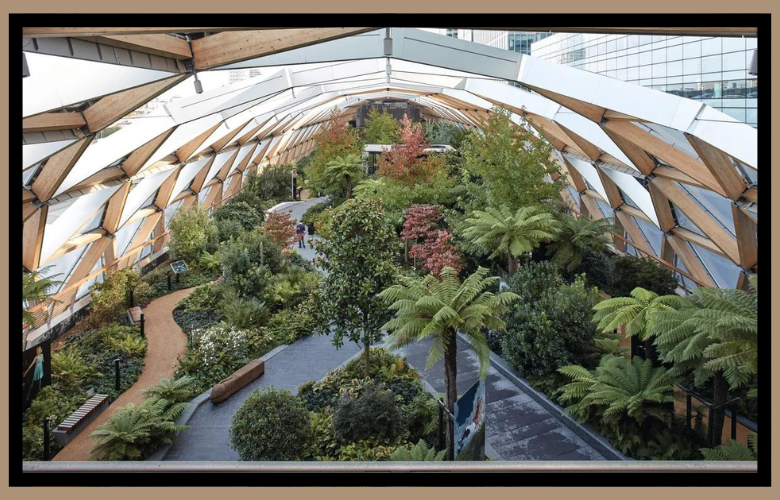
Crossrail Place Roof Garden is one of London’s most fascinating and underrated green spaces, located above the Canary Wharf Elizabeth Line station in East London. It is not a traditional park or street-level garden but a carefully engineered rooftop landscape that sits directly on top of one of the city’s busiest transport hubs. This unique positioning makes it an important example of modern urban design, where infrastructure, architecture, and nature are combined into a single public experience.
What makes this rooftop garden especially remarkable is the contrast it creates. Canary Wharf is known for its tall glass towers, financial institutions, fast-paced working environment, and constant movement of people. Yet, just above this intensity lies a quiet and peaceful environment filled with greenery, filtered sunlight, and slow walking paths. The transition feels almost instant. One moment you are surrounded by noise and crowds, and the next you are in a calm space where the city feels distant.
This transformation is not accidental but carefully planned. was designed to provide a public escape within a dense urban environment. It reflects a growing trend in global cities where green spaces are integrated into transport and commercial infrastructure rather than being separated from them. As a result, it has become both a functional space and a symbolic one, showing how modern London balances development with environmental awareness.
What Is Crossrail Place Roof Garden?
Is a public rooftop garden built above Crossrail Place in Canary Wharf, East London. It forms part of the wider Elizabeth Line infrastructure project, which transformed the way people travel across London. However, beyond its transport function, the structure was designed to include a large public green space that could be freely accessed by anyone.
The garden stretches across a long, narrow rooftop area and is enclosed by a distinctive timber lattice roof. This roof is one of its defining architectural features, allowing natural light to enter while protecting the interior from rain, wind, and extreme weather conditions. This creates a semi-controlled environment that feels open yet sheltered at the same time.
Inside, the layout is designed for walking rather than rushing. Paths wind through different planting zones, seating areas, and open spaces, encouraging visitors to slow down and engage with their surroundings. It is not a large recreational park but a carefully designed experience that focuses on atmosphere, design, and relaxation rather than physical activity or sports.
Architectural Design and Structural Concept
The architecture of Crossrail Place Roof Garden is one of its most important features and a key reason why it attracts attention from designers, architects, and urban planners. The roof structure is made from interwoven timber beams arranged in a geometric lattice pattern. This design is inspired by maritime engineering and reflects Canary Wharf’s historical connection to London’s docklands and shipping industry.
The lattice roof serves several purposes at once. It provides structural strength, controls natural light, and protects the garden from weather conditions. As sunlight passes through the wooden grid, it creates shifting patterns of light and shadow across the plants and pathways. These patterns change throughout the day, meaning the atmosphere is never completely static.
The interior design of the garden also emphasizes flow and movement. Rather than open fields or large lawns, the space is divided into narrow pathways and planting zones. This creates a sense of discovery as visitors move through different sections. Seating areas are placed strategically to encourage rest and observation rather than quick passage.
The overall architectural experience feels modern, controlled, and natural at the same time. It is a rare example of infrastructure being designed with emotional and sensory experience in mind, not just function.
Plant Life and Landscape Design
The planting design inside Crossrail Place Roof Garden is carefully curated to reflect global biodiversity and environmental storytelling. One of the key design concepts is based on the Prime Meridian, which runs through Greenwich in London. Plants are arranged according to whether they originate from the Eastern or Western hemispheres, creating a subtle geographical narrative.
The garden includes a wide variety of plant species, including tropical ferns, bamboo groves, ornamental grasses, evergreen trees, flowering shrubs, and seasonal plants. These plants are selected not only for their appearance but also for their ability to adapt to the controlled microclimate created by the roof structure.
Because the garden is partially enclosed, it supports plant species that would not normally survive in outdoor London conditions. This allows for greater diversity and creates a lush, layered environment that feels more like a botanical conservatory than a traditional park.
Seasonal variation plays an important role in the visitor experience. In spring, fresh growth and lighter green tones dominate the space. In summer, the garden becomes dense and vibrant, with strong contrasts between light and shadow. Autumn brings warmer colours and softer textures, while winter maintains structure through evergreen plants and architectural framing.
This constant change ensures that the garden remains visually interesting throughout the year.
Benefits of Visiting Crossrail Place Roof Garden
Visiting offers several physical, psychological, and practical benefits. One of the most significant is its impact on mental wellbeing. Exposure to natural environments has been widely shown to reduce stress levels, improve focus, and support emotional balance. Even a short visit to this rooftop space can provide a noticeable sense of calm.
Another major benefit is convenience. The garden is completely free to enter and is directly connected to major transport routes, including the Elizabeth Line, Jubilee Line, and Docklands Light Railway. This makes it one of the easiest green spaces to access in central London.
Additional benefits include:
- A quiet escape from the busy Canary Wharf environment
- A sheltered outdoor experience usable in most weather conditions
- A free cultural and architectural attraction
- A visually rich environment suitable for photography
- A peaceful space for reading, reflection, or informal meetings
- A natural break point for commuters and office workers
These benefits make it highly practical for both locals and tourists.
Real-Life Uses and Visitor Behaviour
Crossrail Place Roof Garden is used in many different ways depending on visitor needs. For office workers in Canary Wharf, it acts as a short escape during lunch breaks or between meetings. This brief exposure to nature helps reduce mental fatigue and improves productivity when returning to work.
Tourists often include the garden as part of wider East London exploration. It is usually combined with visits to the Thames riverside, nearby shopping areas, or modern architectural landmarks. Because it is less crowded than major attractions, it appeals to those looking for quieter and more authentic experiences.
Photographers and content creators are particularly drawn to the space due to its strong visual contrast. The combination of greenery, timber architecture, and surrounding skyscrapers creates powerful compositions suitable for both artistic and commercial photography.
Students and remote workers sometimes use the seating areas for reading or focused work. The environment provides enough quiet to concentrate without feeling isolated or disconnected.
Why Is Popular
The popularity of Crossrail Place Roof Garden comes from its unique combination of accessibility, design quality, and atmosphere. Unlike traditional parks that require travel and time, this garden is located directly above a transport hub. Visitors can enter it immediately after arriving in Canary Wharf without needing additional planning.
Its architectural identity also contributes significantly to its appeal. The timber lattice roof, geometric design, and carefully structured planting create a visually striking environment that stands out in a district dominated by glass and steel.
Another key factor is contrast. The transition from a fast-paced financial district to a quiet green environment creates a powerful emotional shift. This contrast makes the experience memorable and encourages repeat visits.
Pros and Cons
Like any urban space, has both strengths and limitations.
Pros
The garden is free to access, centrally located, and highly convenient due to its connection to major transport lines. Its architectural design is unique and visually impressive, and the sheltered environment makes it usable in most weather conditions. It also provides a peaceful atmosphere in one of London’s busiest business districts, along with diverse plant life and seasonal variation.
Cons
However, the garden is relatively small compared to major parks in London. It does not offer large open fields or panoramic skyline views. During peak hours, especially lunchtime, it can become busy with office workers. It is also more suitable for short visits rather than long recreational activities.
Despite these limitations, the overall experience remains highly positive.
Is Crossrail Place Roof Garden Worth Visiting?
is absolutely worth visiting, especially for anyone already in Canary Wharf or exploring East London. Its value is not based on size or scale but on experience quality. It offers a rare combination of nature, architecture, and convenience in a compact urban space.
For tourists, it serves as a hidden gem that provides a break from crowded attractions. For locals, it offers a reliable escape from daily stress and work pressure. Even a short visit can feel refreshing and mentally restorative.
It stands as one of London’s best examples of how modern infrastructure can integrate green space without sacrificing accessibility or design quality.
Frequently Asked Questions
What is Crossrail Place Roof Garden?
It is a rooftop garden above Canary Wharf station featuring landscaped paths, trees, and modern architecture.
Is entry free?
Yes, it is completely free to visit.
How long should I spend there?
Most visitors spend between 20 minutes and one hour.
Can it be visited in bad weather?
Yes, the roof structure provides protection from rain and wind.
Is it suitable for tourists?
Yes, it is a popular hidden attraction in East London.
Conclusion
Crossrail Place Roof Garden is a standout example of modern urban design that successfully integrates nature into a dense city environment. Located above one of London’s busiest transport hubs, it transforms functional infrastructure into a peaceful and visually engaging green space. The combination of timber architecture, global plant diversity, and sheltered walkways creates a unique environment that feels both modern and natural.
Its greatest strength is accessibility combined with atmosphere. Visitors do not need to travel far or pay an entry fee to experience a well-designed urban oasis in the heart of Canary Wharf. Whether used for relaxation, photography, or a short break from work or travel, it consistently delivers value.
While it may not be large, its impact is significant. It demonstrates how cities can evolve by integrating nature into everyday life, making it one of London’s most interesting and worthwhile hidden rooftop gardens.
