

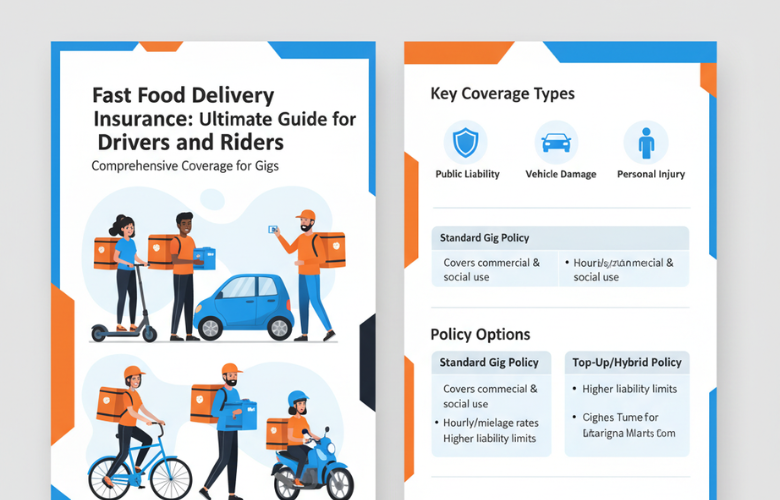
The rise of the gig economy has created a huge demand for delivery drivers and riders who transport meals for compensation. Millions of individuals now deliver for restaurants, takeaways, and platforms, using cars, motorbikes, scooters, or bicycles. Standard personal auto insurance generally does not cover paid delivery work, leaving drivers financially vulnerable in case of accidents, theft, or liability claims. Fast food delivery insurance is specifically designed to fill this gap, providing legal, financial, and operational protection. This comprehensive guide explains everything drivers need to know about delivery insurance, including coverage options, costs, policy types, and practical tips for choosing the best protection.
Why Fast Food Delivery Insurance Is Important
Using a vehicle for paid deliveries classifies it as commercial use. Personal auto insurance typically excludes this, creating potential legal and financial issues. Drivers are exposed to higher risk due to frequent stops, tight deadlines, urban traffic, and long working hours. Without proper delivery insurance, claims related to accidents, injuries, or property damage may be denied. Fast food delivery insurance ensures that drivers are fully protected, offering peace of mind and compliance with legal requirements. In addition, some delivery platforms require proof of coverage before onboarding drivers, making insurance an operational necessity.
What Is Fast Food Delivery Insurance?
Fast food delivery insurance is a specialized type of vehicle insurance for drivers transporting food for pay. Unlike standard policies, it explicitly covers commercial use and the unique risks associated with gig economy work. Policies are tailored to vehicles such as cars, motorcycles, scooters, and bicycles. They protect drivers against accidents, theft, damages, and third-party claims. With proper coverage, delivery drivers can operate safely and confidently, knowing that both their vehicle and earnings are protected from unexpected events.
How Fast Food Delivery Insurance Works
Types of Policies
Fast food delivery insurance is offered in several formats:
-
Pay-as-you-go: Covers only the active hours when deliveries are made, ideal for occasional drivers.
-
30-day policies: Suitable for part-time or seasonal work, providing short-term coverage.
-
Annual plans: Best for full-time drivers, offering comprehensive coverage throughout the year.
Coverage Windows
Insurance typically applies:
-
From the moment a delivery is accepted until the drop-off is completed.
-
While logged into a delivery platform, waiting for assignments.
-
Sometimes even during travel to pick up meals, depending on the policy.
Understanding when the coverage applies is crucial to ensure no gaps in protection.
Core Coverage Components
Liability Coverage
Liability insurance protects drivers if they cause injury to others or damage third-party property during deliveries. This is often the minimum legal requirement.
Comprehensive and Collision Coverage
This protects the driver’s vehicle from accidents, fire, theft, or vandalism. For drivers covering high mileage or dense urban areas, this coverage is vital.
Goods in Transit
Optional coverage for the meals or items being delivered. It reimburses losses or damage during transit, protecting drivers from financial loss.
Uninsured Motorist Protection
Protects the driver if an accident is caused by another driver who lacks adequate insurance.
Optional Add-ons
-
Legal expense coverage to cover lawsuits.
-
Roadside assistance for breakdowns or emergencies.
-
Income protection if the driver is temporarily unable to work due to injury.
Vehicles Covered by Fast Food Delivery Insurance
Cars and SUVs
Popular among drivers carrying multiple orders. Premiums vary depending on vehicle age, engine power, and safety features.
Motorcycles and Scooters
Common in urban areas due to traffic advantages. Premiums are often lower than cars but can be higher due to accident risk from weather or road hazards.
Bicycles and E-Bikes
Specialized insurance is available for bicycle or e-bike delivery. These policies are generally more affordable and focus on theft and accident protection.
Delivery Driver Risk Statistics
-
Delivery drivers often drive 30–50% more miles per week than personal drivers.
-
Accident risk is higher due to frequent stops, tight schedules, and urban traffic conditions.
-
Studies show nearly 40% of delivery drivers lack proper commercial or delivery-specific insurance.
-
Drivers without specialized insurance face higher financial exposure in case of claims.
These figures demonstrate the importance of tailored delivery insurance for risk management and protection.
Costs of Fast Food Delivery Insurance
Insurance premiums vary by driver profile, vehicle type, and region. Typical ranges include:
-
Pay-as-you-go: $5–$20 per active delivery hour.
-
30-day policies: $60–$180 for part-time drivers.
-
Annual policies: $600–$1,500+, depending on vehicle type and coverage level.
Factors affecting cost include driving history, vehicle value, coverage level, and local accident statistics. Comparing quotes from multiple insurers is recommended to find the most suitable policy.
App Coverage vs Delivery Insurance
Delivery platforms may offer insurance for drivers, but it is often limited:
-
Coverage may only be active during delivery trips.
-
Some platform insurance is secondary, meaning claims may not fully cover losses.
-
Comprehensive protection, including vehicle damage or theft, is often not included.
Relying solely on platform insurance can leave drivers unprotected during non-delivery periods.
Benefits of Having Proper Delivery Insurance
-
Ensures legal compliance for commercial vehicle use.
-
Provides financial protection for accidents, theft, or damage.
-
Offers peace of mind, allowing drivers to focus on deliveries.
-
Helps meet platform requirements for onboarding and continued work.
Proper insurance allows drivers to operate confidently, reducing risks and potential liabilities.
Choosing the Best Policy
Delivery Frequency
-
Part-time drivers may opt for pay-as-you-go or 30-day plans.
-
Full-time drivers benefit from annual policies.
Coverage Level
-
Liability and comprehensive coverage are essential.
-
Optional add-ons like goods-in-transit and income protection should be considered.
Insurer Reputation
-
Choose providers with proven claims support and high customer satisfaction.
Legal Compliance
-
Ensure coverage meets local commercial insurance regulations.
(FAQs)
1. What is fast food delivery insurance and why do I need it?
Fast food delivery insurance is specialized coverage for drivers who deliver meals for pay. It protects your vehicle, covers liability, and fills the gap left by standard personal auto insurance.
2. Does my personal car insurance cover food delivery?
Most personal car insurance policies exclude commercial activity, including meal delivery. Without delivery insurance, claims could be denied if an accident occurs during work.
3. How much does fast food delivery insurance cost?
Costs vary by vehicle, location, and coverage. Pay-as-you-go plans can cost $5–$20 per delivery hour, 30-day policies $60–$180, and annual plans $600–$1,500+.
4. Can delivery platform insurance replace fast food delivery insurance?
Platform insurance may provide limited coverage, usually during active deliveries, but it often lacks comprehensive protection and may be secondary. Dedicated delivery insurance is recommended.
5. What vehicles can I insure for fast food delivery?
Cars, SUVs, motorcycles, scooters, bicycles, and e-bikes can be insured. Coverage options and costs vary depending on vehicle type and risk level.
6. What types of coverage are included in delivery insurance?
Key coverage includes liability, collision and comprehensive, goods in transit, and optional add-ons like legal expenses, roadside assistance, and income protection.
7. How do I choose the best fast food delivery insurance policy?
Assess your delivery frequency, vehicle type, coverage needs, and budget. Compare multiple providers and ensure the policy meets legal requirements for commercial vehicle use.
Conclusion
Fast food delivery insurance is essential for anyone delivering meals for pay. It provides coverage for accidents, theft, liability, and operational risks that personal auto insurance does not cover. Selecting the right policy requires assessing delivery frequency, coverage needs, vehicle type, and local regulations. By obtaining proper insurance, drivers can work safely, comply with legal requirements, and protect their earnings. Delivery insurance is not just a precaution—it is a necessity in today’s gig economy.
