

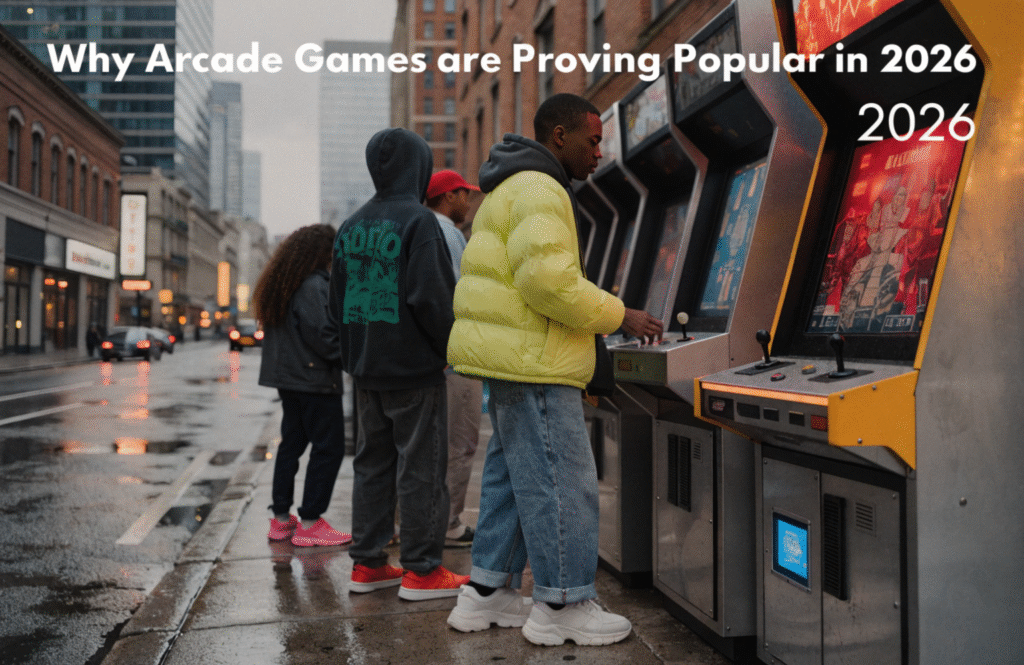
Walk through a seaside town or leisure complex in the UK and you’re likely to hear bursts of music and the low hum of colourful machines lined up side by side.
Playing arcade games might feel like a throwback, yet this nostalgic form of entertainment is up there with streaming, mobile gaming and cloud-based consoles.
While we live much of our lives online, spaces that pull us away from our devices for a while are appealing. Arcades offer something refreshingly direct: you turn up, play, react and share the moment with the people around you – no updates or downloads required.
The appeal of shared, in-person play
According to projections from 2024, the global arcade games market is expected to reach $21.2 billion by 2030, growing at a CAGR of 1.6% from 2023 to 2030. It’s likely that this upward trend is driven by the way these games put you in the same room as other players.
You don’t just compete against a score or an algorithm. Instead, you measure yourself against the person standing next to you, watching every near miss and last-second win. That shared space creates tension and humour in a way home gaming rarely matches.
You’re also competing against whoever logged that top score on the machine before you. This is a tangible competition that makes the game fun.
A renewed love for tactile gaming experiences
When you pull a plunger or steer a wheel, your whole body takes part in the game. That physical feedback changes how you focus and how long you stay engaged. As more games move to digital-only formats and touchscreens dominate everyday life, the solid weight and resistance of arcade controls can be a pleasant change.
The contrast becomes clearer when you compare these machines with purely digital entertainment such as online slots, where interaction is based on taps and clicks. While both are entertaining in their own way, they offer very different experiences.
Arcades offering variety in one place
Modern UK arcades rarely rely on nostalgia alone. You often find classic titles next to games with LED dancefloors, driving simulators, and compact VR setups – all within the same space.
That mix means you can try different styles without committing to a single type of game. Long-time fans revisit familiar titles, while newcomers try something new without feeling out of place.
Events and communities keeping arcade culture alive
Arcade popularity also grows through the communities that form around it. Across the UK, expos, high-score tournaments and clubs all bring fans together.
These events introduce new audiences and reward practice. Online forums and social channels extend that engagement, but the focal point remains the physical games themselves. Look out for a local event and take part, because that sense of belonging often turns a one-off visit into a fun hobby.
