

Exploring which age group is most represented in sexual offence cases provides valuable insight into the demographic patterns faced by law enforcement and the justice system. Analysing age-related trends helps researchers and legal professionals identify risk factors, shape prevention strategies, and support informed public discussion.
Age demographics play a significant role in crime statistics, particularly for sensitive offences. Understanding which age groups are most commonly involved allows authorities to allocate resources more effectively and design targeted safeguarding measures. When cases involve complex digital evidence, legal specialists, including indecent image solicitors, are often essential in establishing the full context of the offence. Focusing on reliable age-related data also supports broader conversations about prevention, rehabilitation, and the social factors linked to offending behaviour.
Statistical overview of age and sexual offences
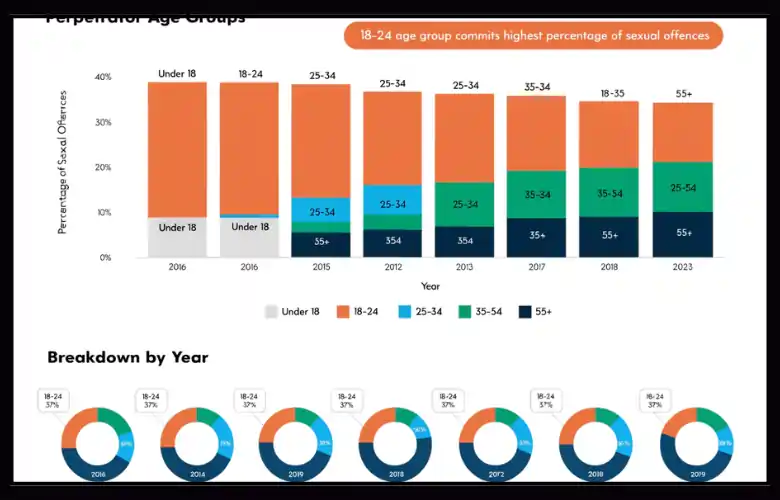
Official UK data from the Office for National Statistics and the Ministry of Justice shows that sexual offences occur across a wide range of age groups. However, younger adults are consistently overrepresented in both police and court data.
Available statistics indicate that individuals aged 18 to 29 account for the largest proportion of suspects and offenders in sexual offence cases in the UK. This age group typically shows the highest rates when adjusted for population size, particularly among men. At the same time, a substantial number of offences involve individuals in their 30s and 40s, meaning the distribution is not limited to one narrow age bracket.
It is important to recognise that age patterns vary depending on the type of offence. For example:
- Technology-related offences, including those involving indecent images or online communication, are more frequently associated with younger adults
- Offences involving positions of trust or authority are more likely to involve older individuals
- Historical offences may lead to prosecutions later in life due to delayed reporting
Because of these differences, UK authorities and researchers emphasise analysing age demographics alongside offence type to avoid oversimplification. Additionally, reporting practices and victim willingness to come forward can influence the age profile seen in official statistics, meaning recorded figures may not fully reflect all incidents.
Factors contributing to higher incidence among certain age groups
Several factors contribute to the higher representation of younger adults in sexual offence statistics. Increased independence, evolving social relationships, and exposure to digital environments all play a role, particularly during late adolescence and early adulthood. Changes in how people communicate and form relationships, especially online, can also increase the risk of behaviour that crosses legal boundaries.
Digital technology is a key factor in many modern cases. The widespread use of smartphones, social media, and messaging platforms among younger age groups can increase exposure to risky or inappropriate interactions. Legal professionals working with digital evidence often highlight that younger individuals may not always fully understand the legal implications of their actions in online environments. This is particularly relevant in cases involving image sharing, where intent and awareness of the law can vary significantly.
Developmental psychology also provides important context. The late teenage years and early twenties are associated with ongoing brain development, particularly in areas related to impulse control, decision-making, and risk assessment. Combined with increased social independence and experimentation, this stage of life can create situations where poor judgement leads to criminal behaviour. Educational initiatives that clearly address consent, boundaries, and legal consequences can therefore play a key role in prevention.
The role of prevention and intervention for dominant age groups
Identifying the age group most commonly associated with sexual offences allows for more effective prevention strategies. Schools, universities, and community organisations can provide targeted education on consent, respectful relationships, and digital safety. These efforts are most effective when they are tailored to the specific behaviours and risks relevant to younger age groups.
For individuals already involved in the justice system, age-appropriate intervention and rehabilitation programmes are essential. Tailoring responses to the maturity level, circumstances, and risk profile of offenders can improve outcomes and reduce reoffending. Legal professionals emphasise the importance of balancing accountability with education and rehabilitation, particularly for younger individuals. Early intervention programmes have also been shown to reduce repeat offending when they focus on behaviour change and awareness.
Ongoing research and future trends in age and offence statistics
Demographic patterns in sexual offence cases are continuously monitored by researchers, policymakers, and advocacy groups. Access to accurate and up-to-date data remains essential for identifying trends and responding to emerging challenges, particularly as technology and social behaviours evolve.
Issues such as the growth of digital communication, changing societal attitudes towards consent, and evolving legal definitions require ongoing adaptation. While younger adults currently represent the largest proportion of offenders in many datasets, continued research is necessary to track how these patterns develop over time.
Maintaining a clear focus on age-related trends, supported by reliable data from organisations such as the Office for National Statistics and the Ministry of Justice, ensures that prevention strategies, legal responses, and safeguarding policies remain effective and evidence-based.
