

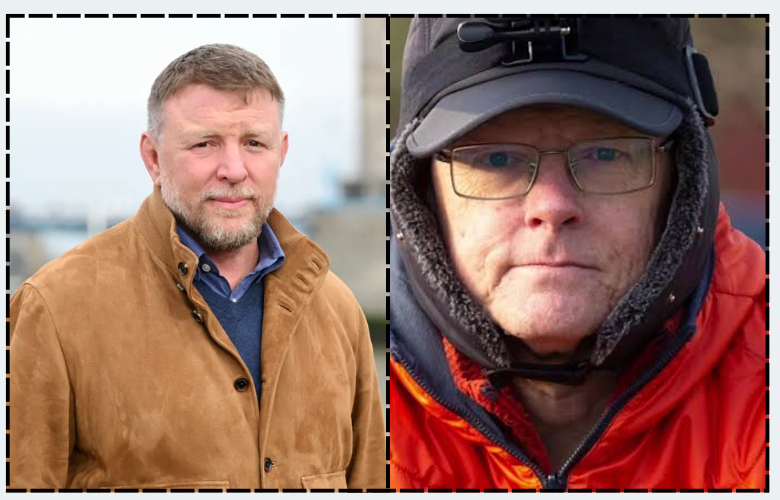
Cycling Mikey is the online name of Michael van Erp, a London-based YouTuber and road-safety campaigner known for filming traffic incidents from a helmet camera. His videos commonly feature motorists he believes are committing traffic offences, including alleged mobile-phone use, ignoring road restrictions and behaviour that could endanger cyclists or pedestrians. He then reports relevant footage to the police and publishes selected incidents online. That approach has made him a recognisable internet personality and a controversial figure in Britain’s debate over road safety. His channel has grown into a substantial platform, with third-party statistics recording about 122,000 subscribers and more than 82 million views in July 2026. His story matters because it raises wider questions about camera evidence, citizen reporting, dangerous driving and how cyclists should respond when they believe motorists are breaking the rules.
Who Is Michael van Erp?
Michael van Erp is a Dutch-born cyclist and YouTube creator based in London. He is better known online by the name Cycling Mikey, with his public work focused heavily on what happens between motorists, cyclists and other road users.
His channel is built around footage recorded from a helmet camera. Rather than concentrating on cycling routes, equipment or fitness, he documents incidents on London’s roads and explains why he believes particular driving behaviour is unsafe or unlawful.
The channel describes its content as life on the road from a helmet camera and also makes an important point about his relationship with cars: he is a driver himself and says he enjoys cars, but dislikes dangerous driving. That helps explain why his work is better understood as road-safety content rather than an anti-car campaign.
His public profile has grown because some of the incidents he records have been reported to the police, while others become widely discussed videos.
Why Does He Film Drivers?
The motivation behind Van Erp’s work is partly personal. He has previously explained that his father was killed in a road collision involving a drunk driver when Van Erp was 19. That experience influenced his interest in dangerous driving and road safety.
His method is relatively straightforward. A camera records his journeys, and when he believes he has witnessed an offence, he can retain the footage and submit it to the authorities.
This can be useful because video may provide details that are difficult to establish from a verbal complaint alone. It can show the road layout, vehicle movements, traffic signals and the interaction between different road users.
However, footage is not automatically proof of guilt. Police still need to assess the evidence, identify the driver where necessary and determine whether an offence can be established.
That distinction is important when discussing online road-safety videos. A viewer can believe an incident looks obvious while the legal position may depend on additional evidence.
What Does Cycling Mikey Report to the Police?
A major part of Van Erp’s work involves reporting suspected traffic offences. His videos have covered a wide range of behaviour rather than one single type of motoring offence.
Common examples include:
- Using a handheld mobile phone while driving
- Ignoring traffic signs or temporary restrictions
- Disobeying traffic lights
- Making prohibited turns
- Driving through restricted areas
- Dangerous interactions with cyclists
- Manoeuvres that appear to put pedestrians or other road users at risk
The practical benefit of camera evidence is that it can give investigators something concrete to examine. Instead of relying entirely on memory, there may be recorded footage showing what happened.
But reporting and prosecution are not the same thing. A suspected offence can be reported without leading to a charge, while a prosecution can also fail if the available evidence does not meet the required standard.
That is why responsible coverage should distinguish between an allegation, a police investigation, a prosecution and a conviction.
What Are the Benefits of Camera-Based Road Reporting?
The biggest benefit is potentially better evidence. A clear recording can help authorities understand an incident that might otherwise depend on conflicting accounts from a driver and cyclist.
There is also a deterrent effect. Knowing that dangerous behaviour may be recorded can encourage some road users to think more carefully about mobile-phone use, traffic signals and vulnerable road users.
For cyclists, camera footage can also provide a record of repeated problems on particular roads. When combined with wider evidence, this can help highlight locations where road design or enforcement may need attention.
The approach has wider value when it encourages people to report incidents through appropriate channels rather than simply sharing accusations online.
The important limitation is that cameras should support enforcement rather than replace it. The strongest use of footage is as evidence for the proper authorities, not as an excuse for online punishment or personal confrontation.
Famous Cases That Made Him Better Known
Several high-profile incidents helped turn the London cyclist into a much more recognisable internet personality.
One of the best-known cases involved filmmaker Guy Ritchie. Van Erp recorded Ritchie using a mobile phone while driving in London in 2019. Ritchie was subsequently prosecuted and received a six-month driving ban.
Former professional boxer Chris Eubank was also filmed in an incident involving a red traffic light and was subsequently prosecuted.
Another widely discussed case involved former footballer Frank Lampard. Footage was used in proceedings over alleged mobile-phone use, but the prosecution was later dropped because of insufficient evidence.
These examples demonstrate why legal wording matters. Being filmed or reported does not necessarily mean a person is convicted.
They also show how citizen-recorded footage can attract attention when the person involved is already well known. A routine road incident can quickly become a national story once a celebrity is involved.
Gandalf Corner and the Confrontational Side of His Work
One of the most recognisable parts of Van Erp’s online identity is a London location he nicknamed Gandalf Corner.
The junction near Regent’s Park became associated with his efforts to identify drivers making prohibited manoeuvres. His approach sometimes went beyond simply recording what happened, with the cyclist physically positioning himself to prevent motorists from continuing.
That behaviour is a major reason opinions about him are so divided.
Supporters argue that directly challenging dangerous behaviour demonstrates that road rules matter. Critics believe physically confronting vehicles can escalate an otherwise manageable situation and expose everyone involved to unnecessary danger.
A 2021 confrontation involving theatre agent Paul Lyon-Maris eventually reached court. Lyon-Maris was cleared of dangerous-driving and assault allegations but admitted a lesser driving offence.
The case illustrates why road incidents should be assessed through evidence and legal proceedings rather than social-media reactions alone.
What Happened in the Hammersmith Incident?
The most widely discussed recent controversy happened in August 2025 on Paddenswick Road in Hammersmith.
The area was affected by roadworks and a no-entry restriction. Footage showed Van Erp attempting to prevent a Fiat 500 from proceeding through the restricted section.
The confrontation escalated when he moved his bicycle into the vehicle’s path. The car continued forward and struck the bicycle, scattering belongings across the road.
Van Erp later said that he had not intended to cause a collision and explained that he could not brake his 28kg electric bike quickly enough once he realised the driver was continuing forward.
The Metropolitan Police said it was aware of footage appearing to show the incident and stated at the time that no arrests had been made.
The episode reignited the central argument around his methods: even if a driver appears to be ignoring a restriction, is physically blocking the vehicle a safe or appropriate response?
That question remains important because road-safety campaigning should ultimately reduce risk rather than create another dangerous situation.
Is Cycling Mikey Still Active on YouTube?
Yes. The channel remains active and has built a sizeable audience over many years.
Third-party YouTube tracking recorded approximately 122,000 subscribers, 82.6 million views and 2,859 uploaded videos by July 2026. The channel was created in March 2009, giving it more than 17 years of history.
Recent channel statistics also show continued uploads during 2026, demonstrating that the creator remains active rather than simply benefiting from older viral videos.
The scale of the channel is significant because this is a relatively specialised subject. Instead of conventional entertainment, the content focuses on road incidents, traffic behaviour and interactions between cyclists and motorists.
That niche has nevertheless produced a large and engaged audience.
For readers searching for current information, the 2026 figures are more useful than older articles quoting subscriber numbers from 2022 or 2025.
Why Do People Watch His Videos?
The appeal comes partly from the immediacy of the footage.
Viewers are able to see real traffic situations rather than reading a description after an incident has happened. Many videos also create a straightforward question: did the motorist behave lawfully and safely?
There is a second attraction: consequences. When footage is reported, audiences may later learn whether police took action.
His content also taps into a common frustration among road users. Many drivers, cyclists and pedestrians have witnessed behaviour they considered dangerous but had no practical way of documenting it.
The videos therefore combine road safety with an element of real-world drama.
However, viewers should remember that social-media content is not a courtroom. A compelling video can show an important incident without necessarily providing every fact needed to establish legal responsibility.
That distinction makes critical viewing just as important as the footage itself.
Is He a Road Safety Campaigner or a Vigilante?
The answer depends partly on how the terms are being used.
Van Erp’s activities clearly have a road-safety element. He records suspected offences, reports them and uses his platform to discuss dangerous driving.
At the same time, his willingness to challenge motorists directly explains why some commentators describe him as a vigilante cyclist.
He does not have the legal authority to convict motorists or impose driving penalties. Those decisions belong to the police, prosecutors and courts.
The strongest description is therefore that he is a road-safety campaigner, citizen reporter and internet personality whose methods can be confrontational.
That wording recognises both sides of the debate without turning a description into a judgement.
It also reflects an important principle: someone can make a useful contribution by documenting dangerous driving while still attracting legitimate criticism over how they respond during individual encounters.
Is It Worth Watching His Content?
For people interested in UK road safety, cycling culture or real-world traffic incidents, the channel can provide useful material.
Its greatest value is the opportunity to see how conflicts between road users actually develop. It can also encourage viewers to think about mobile-phone use, traffic restrictions, vulnerable road users and the consequences of impatience.
The content is less suitable for anyone looking for neutral, formal legal guidance. The videos are created from the perspective of the person recording them, and the confrontational nature of some incidents can influence how viewers interpret what they see.
The best way to use the material is as a starting point rather than a final verdict.
Watch the footage, consider the road layout and circumstances, and distinguish between what is visible, what is alleged and what was legally established.
That approach provides much more value than simply choosing a side.
What Can Drivers and Cyclists Learn From His Story?
The wider lesson is that road safety should not become a battle between two groups.
Drivers need to follow traffic signs, avoid handheld mobile-phone use, give cyclists appropriate space and remain patient around vulnerable road users.
Cyclists have responsibilities too. They should obey applicable traffic rules, remain predictable and avoid putting themselves in the path of moving vehicles.
The Hammersmith incident demonstrates why this matters. Even when one person believes another has broken the rules, a physical confrontation can introduce additional risks.
There is also a useful lesson about evidence. If a camera captures suspected dangerous driving, preserving the footage and reporting it through an appropriate channel can be more constructive than attempting to enforce the rules personally.
Modern cameras give ordinary road users more evidence than ever before. Using that technology responsibly is the real opportunity.
Frequently Asked Questions
What is Cycling Mikey’s real name?
His real name is Michael van Erp. He is a Dutch-born cyclist and YouTube creator based in London.
How old is Michael van Erp?
He was born in 1972, so he is in his mid-50s in 2026. Reliable public sources do not consistently provide his exact birth date, so a specific birthday should not be assumed.
What does Michael van Erp do?
He records traffic incidents from a bicycle-mounted or helmet camera, reports suspected offences to the police and publishes selected footage on YouTube.
How many subscribers does his YouTube channel have?
Third-party statistics recorded approximately 122,000 subscribers and 82.6 million views in July 2026. The figures change as the channel gains views and subscribers.
What happened in the 2025 Hammersmith incident?
In August 2025, Van Erp attempted to prevent a Fiat 500 from travelling through a no-entry section on Paddenswick Road. His bicycle was struck by the car after he moved it into the vehicle’s path. Police said they were aware of the footage and that no arrests had been made at that stage.
Final Verdict on Cycling Mikey
Michael van Erp has built a distinctive online career by combining cycling, helmet-camera footage, citizen reporting and road-safety commentary. His work has helped bring suspected traffic offences to public attention and has been associated with prosecutions involving high-profile motorists.
However, the controversy around his methods is just as important as his popularity. Recording dangerous driving can provide valuable evidence, but physically confronting vehicles creates a different set of risks. The 2025 Hammersmith incident demonstrated how quickly a road dispute can become a physical confrontation.
Overall, his work is most valuable when viewed as a source of road-safety footage and public discussion, rather than as a substitute for police investigation or the courts. Drivers and cyclists can both learn from the wider message: follow the rules, protect vulnerable road users, avoid unnecessary confrontation and use recorded evidence responsibly.
