

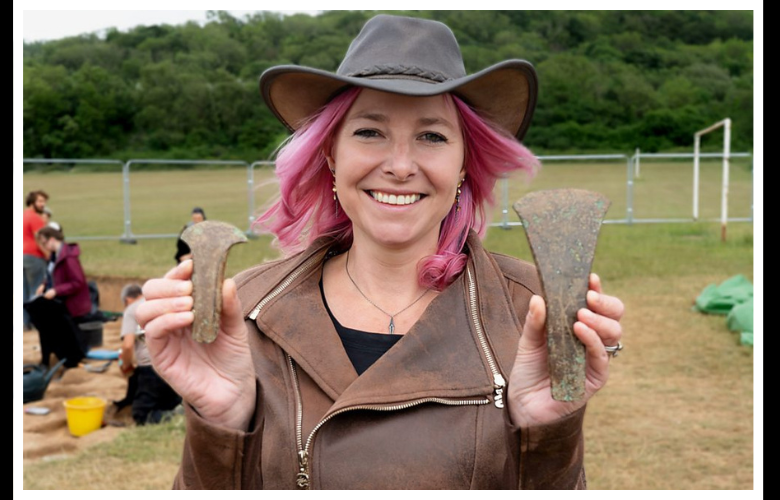
Digging for Britain has established itself as one of the most authoritative archaeological documentary series in the United Kingdom, offering viewers a deep and engaging look at discoveries that reshape historical understanding. The series follows real excavation projects across the country, documenting how centuries-old artefacts and structures are carefully uncovered from beneath fields, towns, and coastal landscapes. By combining expert commentary with scientific research, it transforms complex archaeological findings into compelling narratives that are accessible to a broad audience. From prehistoric burial mounds to Roman towns and medieval villages, the program highlights the extraordinary depth and diversity of Britain’s past. Through detailed storytelling and rigorous investigation, digging britain connects modern society with the ancient civilizations that shaped its foundations.
What Does Digging for Britain Really Mean?
The phrase “Digging for Britain” carries both literal and symbolic meaning, representing far more than the act of excavation. On a practical level, it refers to archaeological teams physically uncovering artefacts, buildings, and remains buried beneath layers of soil. On a deeper level, the title reflects a national search for identity, heritage, and historical truth embedded in the landscape. Presented by Alice Roberts and broadcast on BBC, the series frames archaeology as an intellectual journey as well as a scientific process. It suggests that every excavation contributes to a broader understanding of how communities evolved over thousands of years. In this way, digging britain becomes a metaphor for rediscovering the roots of modern British society.
The Cultural Significance of the Title
The wording of the title emphasizes collective ownership of history, implying that the discoveries belong to the entire nation rather than to academic institutions alone. It highlights curiosity, preservation, and the responsibility to protect historical evidence for future generations. By presenting archaeological research in an accessible format, the series strengthens public connection to heritage sites and ancient landscapes. The title also reflects the ongoing nature of discovery, suggesting that Britain’s history is not fixed but continually reinterpreted as new evidence emerges. This layered meaning enhances the cultural and educational impact of the program.
The Evolution of Archaeology in the United Kingdom
Archaeological practice in the UK has evolved significantly over recent decades, transitioning from traditional excavation techniques to advanced interdisciplinary research. Modern archaeologists use radiocarbon dating, isotopic analysis, and DNA testing to establish precise timelines and trace population movements. Digital mapping and satellite imaging allow researchers to identify hidden settlements without disturbing fragile remains. These technological advancements provide deeper insights into trade networks, agricultural systems, and migration routes that shaped early societies. By documenting these innovations, digging for britain demonstrates how scientific progress continues to refine and sometimes challenge established historical narratives.
Technology and Scientific Innovation
Advanced tools such as ground-penetrating radar and aerial photography reveal entire landscapes that were once invisible to researchers. Laboratory analysis of soil samples and skeletal remains uncovers information about climate conditions, diet, and health in ancient populations. These scientific methods correct earlier misconceptions and introduce new perspectives on Britain’s development. The integration of multiple disciplines, including anthropology and environmental science, allows for a more comprehensive understanding of past communities. Through its coverage of these breakthroughs, digging for britain presents archaeology as a dynamic and evolving field rather than a static study of ruins.
Ancient Settlements and Everyday Life
Across England, Scotland, Wales, and Northern Ireland, excavations continue to reveal ancient settlements that once thrived in diverse environments. Archaeologists frequently uncover Iron Age hillforts, Roman roads, Saxon villages, and medieval market towns preserved beneath farmland and urban infrastructure. Artefacts such as pottery shards, coins, agricultural tools, and domestic objects provide tangible evidence of daily routines and economic systems. These discoveries illustrate how communities adapted to environmental challenges, external invasions, and shifting political structures over centuries. By reconstructing patterns of work, trade, and social organization, digging for britain transforms fragments of material culture into vivid portraits of everyday life in ancient Britain.
Social Structures and Community Life
Material evidence often reveals hierarchical structures within early societies, from elite residences to modest dwellings. Burial practices provide insight into religious beliefs and social status, offering clues about how communities viewed life and death. Evidence of craft production and long-distance trade demonstrates that Britain was historically connected to wider European networks. Such findings challenge outdated ideas about isolation and emphasize the cultural diversity of early populations. Through human-centered interpretation, digging for britain turns archaeological data into meaningful stories that resonate with contemporary audiences.
Regional Diversity and National Identity
Britain’s varied geography has produced a rich and complex archaeological record shaped by climate, natural resources, and strategic location. Coastal regions preserve evidence of maritime trade, fishing communities, and shipbuilding traditions that connected Britain to continental Europe. Inland landscapes reveal agricultural systems, fortified settlements, and evidence of shifting land use patterns over time. Northern territories often display Scandinavian influence from the Viking Age, while southern England contains extensive remains from Roman occupation and medieval expansion. By exploring these regional distinctions, digging for britain highlights how local histories contribute to a broader narrative of national identity.
Landscape as a Historical Influence
The relationship between environment and settlement patterns is central to understanding Britain’s past. Rivers served as trade routes, hills provided defensive advantages, and fertile plains supported agricultural growth. Environmental changes, including climate fluctuations, influenced migration and economic adaptation. Recognizing this connection between landscape and society deepens appreciation for the resilience and ingenuity of early communities. The program consistently emphasizes how geography shaped historical development across different eras.
Cultural Heritage and Modern Relevance
Preserving archaeological heritage is essential for maintaining cultural continuity and national awareness. Excavation projects often reveal sites threatened by urban expansion or environmental change, highlighting the urgency of conservation efforts. Public interest in historical discovery has grown steadily, with increased participation in community archaeology programs and educational initiatives. Schools and universities frequently reference televised discoveries as teaching tools, inspiring future researchers and historians. Through accessible storytelling and scientific credibility, digging for britain ensures that Britain’s ancient roots remain visible, valued, and relevant in modern society.
(FAQs)
1. What is Digging for Britain about?
Digging for Britain is a UK documentary series showcasing real archaeological excavations. It uncovers artefacts, settlements, and historical insights from across Britain.
2. Who presents Digging for Britain?
The series is presented by Alice Roberts, who makes complex archaeological discoveries easy to understand.
3. Where is Digging for Britain filmed?
Filming takes place at excavation sites throughout the United Kingdom. Each episode explores rural, coastal, and urban historical locations.
4. Is Digging for Britain based on real discoveries?
Yes, the show features genuine archaeological research. Professional archaeologists document real excavations on the series.
5. What historical periods does the show cover?
The program explores Prehistoric, Roman, Anglo-Saxon, Viking, and Medieval Britain. It highlights discoveries from different eras.
6. How does archaeology help us understand Britain’s history?
Archaeology uncovers artefacts and structures that explain past communities. These findings reveal settlement patterns, trade, and cultural life.
7. Where can I watch Digging for Britain?
The series is broadcast on BBC. Episodes are also often available on official BBC streaming platforms.
Conclusion:
The enduring appeal of digging for britain lies in its ability to combine rigorous scientific research with powerful cultural storytelling. Each excavation uncovers another layer of Britain’s long and complex historical narrative, deepening understanding of migration, settlement, and social evolution. By presenting discoveries within a broader historical framework, the series demonstrates that archaeology remains an active and continually developing discipline. The findings showcased throughout the program reshape perceptions of identity and cultural continuity. Ultimately, digging britain reveals that the soil beneath the United Kingdom still holds stories capable of transforming how history is understood today.
