

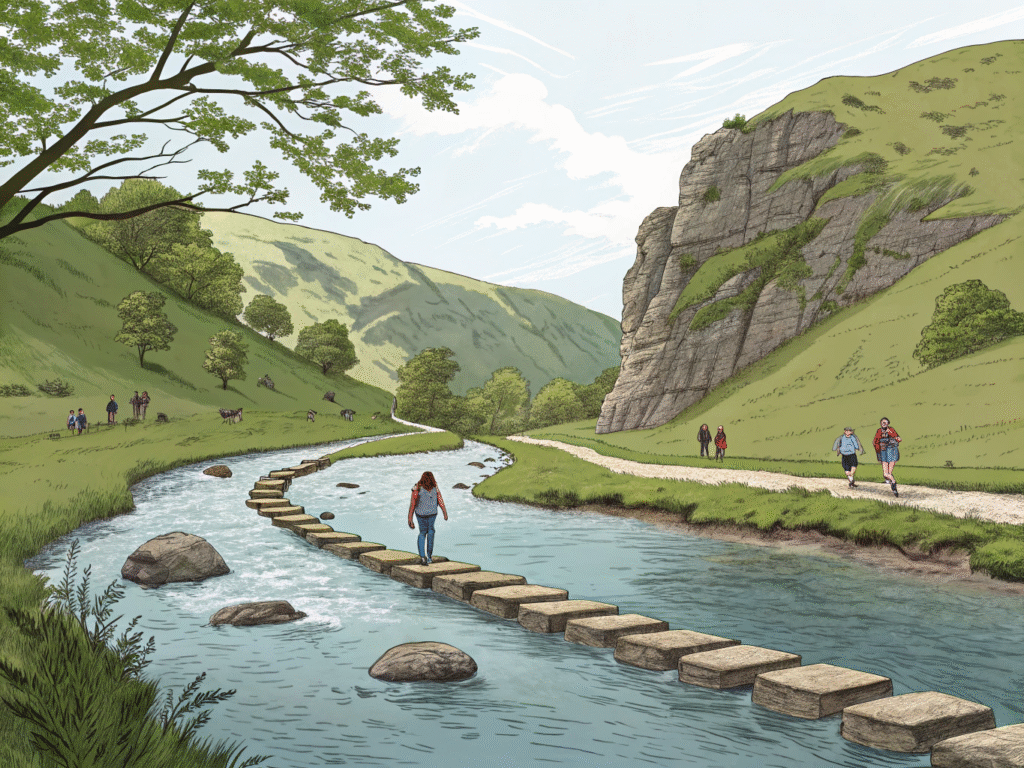
The Dovedale Stepping Stones are one of the most renowned natural landmarks in Derbyshire’s Peak District, attracting thousands of visitors each year. These iconic limestone stones span the River Dove, allowing visitors to cross while enjoying breathtaking scenery. Surrounded by towering cliffs, verdant meadows, and gently flowing waters, the area provides an unforgettable experience for hikers, photographers, and nature enthusiasts alike. Visitors can immerse themselves in the adventure of carefully stepping across the stones or take a leisurely stroll along riverside trails to enjoy the peaceful surroundings. Seasonal changes enhance the valley’s beauty, from colorful wildflowers in spring to fiery autumn foliage, ensuring that every visit feels unique and memorable.
What sets Dovedale apart is the combination of accessibility and dramatic landscapes. Families, casual walkers, and seasoned hikers can enjoy the area without difficulty, while photographers are drawn to the reflective river and limestone formations that change with light and weather. Wildlife sightings are abundant, with deer, foxes, and a variety of birds providing natural charm along the way. The stepping stones are more than just a crossing—they are the heart of a scenic adventure that combines history, natural beauty, and outdoor exploration in one destination.
The History of Dovedale Stepping Stones
The Dovedale Stepping Stones are not only scenic but steeped in history. Originally, these stones were used as a practical way for local residents to cross the River Dove before bridges were common. Over the centuries, the stones evolved from a functional feature to a celebrated tourist attraction, particularly during the Victorian era when Derbyshire became a popular destination for travelers, artists, and writers seeking inspiration from England’s countryside. The stones themselves were formed naturally over thousands of years by water erosion, creating a crossing that is both practical and visually striking. Today, they are considered a symbol of the Peak District’s geological and scenic significance, frequently appearing in guidebooks, postcards, and artistic works.
Beyond their practical purpose, the stepping stones have inspired generations of visitors and creatives. Poets, painters, and photographers have long captured Dovedale’s harmony of river, stone, and valley landscapes. In modern times, conservation efforts within the Peak District National Park ensure that the stones remain protected, preserving their beauty and historical importance for future generations. Walking across the stones today connects visitors to centuries of cultural appreciation, making Dovedale not only a natural wonder but a living piece of England’s heritage.
How to Reach Dovedale Stepping Stones
Reaching the Dovedale Stepping Stones is simple and convenient for travelers of all types. Those driving can use National Trust car parks at Ilam and Thorpe, which provide direct access to the walking trails. These car parks are popular, especially on weekends and during holidays, so early arrival is recommended. Public transport options are available as well, with buses from nearby towns like Ashbourne and Buxton providing easy access for visitors without a car. Hikers and walking enthusiasts can follow scenic footpaths from surrounding villages, offering a more immersive experience of the Peak District landscape before reaching the stones.
The journey to Dovedale is part of its charm, with trails that gradually reveal limestone cliffs, wooded areas, and wildlife along the riverbanks. The gradual approach builds anticipation as the stepping stones come into view, creating a sense of discovery and adventure. Clear signage and well-maintained paths ensure that visitors of all ages can navigate safely while enjoying the natural beauty. Whether arriving by car, bus, or on foot, the journey itself is a scenic prelude to the iconic experience of crossing the Dovedale Stepping Stones.
The Dovedale Walk Experience
Walking through Dovedale is a memorable combination of adventure, relaxation, and natural beauty. Starting from Ilam or Thorpe, the trails follow the River Dove, passing limestone cliffs, meadows, and shaded woodland areas. The highlight of the walk is the stepping stones, which provide a fun challenge, excellent photo opportunities, and a tangible connection with nature. Along the route, visitors can explore small caves and rock formations or climb viewpoints such as Lovers’ Leap, which offers breathtaking panoramic views of the valley and river below. The trails cater to all fitness levels, making Dovedale suitable for families, casual walkers, and outdoor enthusiasts seeking inspiration.
A leisurely walk through Dovedale typically takes 2–3 hours, allowing time for breaks, wildlife observation, and riverside picnics. The river itself adds to the serenity, with reflective waters and gentle rapids creating a calming environment. Seasonal changes enhance the experience, offering lush greenery in summer, colorful blooms in spring, fiery leaves in autumn, and peaceful winter landscapes. The stepping stones remain the centerpiece, blending adventure, history, and visual beauty to create an unforgettable Peak District walk.
Best Time to Visit Dovedale Stepping Stones
The beauty of Dovedale changes with the seasons, making the timing of your visit important. Spring (March–May) brings vibrant wildflowers, fresh greenery, and active wildlife. Summer (June–August) offers long daylight hours and warm weather, perfect for family outings, though this is also the busiest season. Autumn (September–November) transforms the valley with golden, orange, and red foliage, reflected in the calm river for stunning photo opportunities. Winter (December–February) provides a quieter, serene experience, but visitors should exercise caution, as stones can become slippery and river levels may rise.
Early mornings or late afternoons are ideal for avoiding crowds and capturing beautiful light for photography. Seasonal wildlife activity also varies, with spring and autumn being the best times for bird and deer sightings. Regardless of the season, the stepping stones remain a timeless attraction that provides a peaceful, scenic, and adventurous experience in the Peak District.
Safety Tips for Crossing the Stepping Stones
Although the Dovedale Stepping Stones are generally safe, precautions ensure a smooth experience. Visitors should wear sturdy, waterproof footwear to prevent slipping on mossy or wet limestone surfaces. Crossing carefully, one stone at a time, is recommended, and children should be closely supervised. Avoid stepping on the stones during heavy rain, floods, or fast-flowing river conditions, as these increase the risk of accidents. Even in dry weather, caution is advised, particularly for older adults or those less confident on uneven surfaces. Following these safety tips allows everyone to enjoy the stones while fully appreciating the surrounding scenery.
Things to Do Near Dovedale Stepping Stones
Dovedale offers numerous attractions beyond the stepping stones. Ilam Hall Gardens provides landscaped gardens, shaded walking paths, and tranquil picnic areas. Adventure seekers can climb Thorpe Cloud, a moderate hike that rewards visitors with panoramic views of Dovedale Valley and the River Dove. Wildlife enthusiasts can spot birds, deer, and foxes along the river, while photographers find endless opportunities to capture cliffs, reflective waters, and seasonal landscapes. Families can enjoy picnic breaks and leisurely walks, making Dovedale a versatile destination for a full day of exploration and relaxation.
Fun Facts About Dovedale Stepping Stones
The Dovedale Stepping Stones span approximately 20 meters across the River Dove and are naturally formed over thousands of years by limestone erosion. They have been featured in guidebooks, postcards, and films for over a century, becoming one of Derbyshire’s most recognizable natural landmarks. Dovedale attracts over 200,000 visitors annually, reflecting its popularity and significance within the Peak District. Beyond aesthetics, the stones have inspired generations of artists and writers, symbolizing the harmony between nature, culture, and recreation.
Tips for a Perfect Visit
For the best experience, plan your Dovedale visit carefully. Arrive early or late to avoid crowds and fully enjoy the peaceful scenery. Bring a camera to capture the iconic stones, river, and cliffs. Pack water, snacks, or a picnic for riverside breaks. Explore nearby trails, such as Thorpe Cloud, or visit Ilam Hall Gardens for additional attractions. Check the weather, particularly in winter, to ensure safe conditions. Following these tips allows visitors to enjoy adventure, relaxation, photography, and nature observation all in one trip.
(FAQs)
Q1: Are the Dovedale Stepping Stones suitable for children?
Yes, children can cross safely with close supervision due to slippery limestone surfaces.
Q2: Is there an entry fee?
No, access is free, though National Trust car parks may charge a small parking fee.
Q3: How long is the main Dovedale walk?
The main trail is approximately 3–4 miles and takes 2–3 hours at a leisurely pace.
Q4: Can dogs visit Dovedale?
Yes, dogs are welcome, but they should be on a lead near the river and paths.
Q5: What is the best season to visit?
Spring and autumn are the most scenic, summer is warm, and winter offers a quiet, peaceful experience.
Conclusion
The Dovedale Stepping Stones are a timeless Peak District attraction, offering adventure, relaxation, and unforgettable scenery. From the iconic limestone crossing to panoramic viewpoints like Thorpe Cloud, the valley provides an immersive experience for families, hikers, photographers, and nature enthusiasts alike. Crossing the stones connects visitors with history, natural beauty, and cultural heritage, creating memories that last a lifetime. By planning carefully, following safety tips, and exploring nearby trails and attractions, every visit can be a complete outdoor experience. The stepping stones remain a symbol of Derbyshire’s charm, inviting visitors to discover the Peak District’s serene landscapes season after season.
