

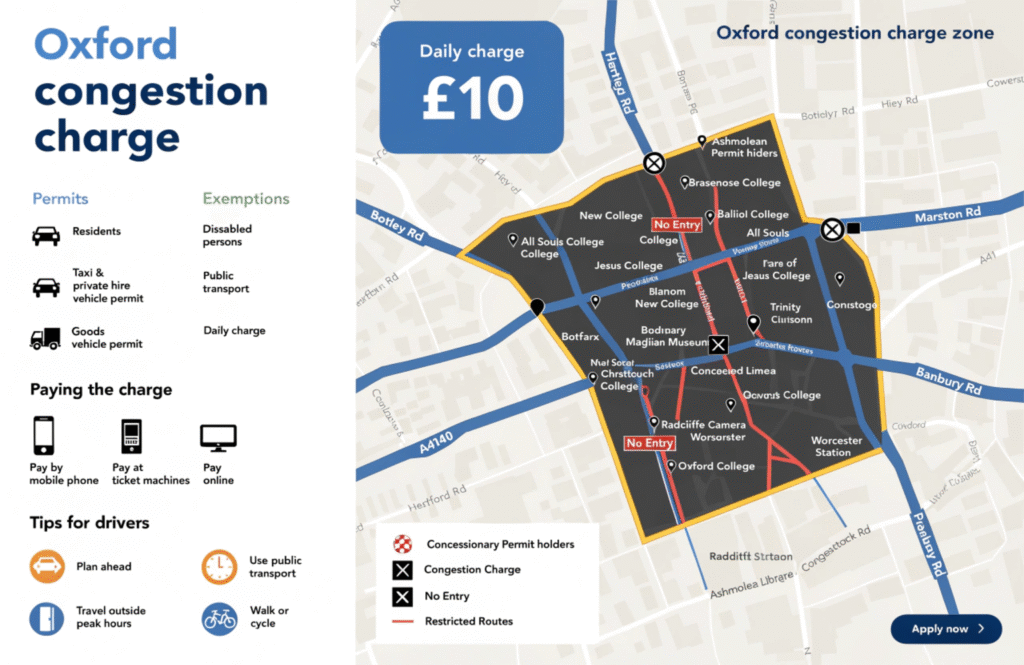
The Oxford congestion charge is a temporary daily road charge introduced in October 2025. It aims to reduce city centre congestion while major roadworks continue, including the closure of Botley Road. Cars and some motorhomes must pay a £5 daily fee at six designated charge points. The scheme encourages drivers to consider public transport, walking, or cycling. Buses, emergency services, and deliveries can move efficiently without delays. Residents and visitors need to understand the fees, exemptions, and permits to avoid fines.
The scheme is temporary and allows city authorities to monitor traffic flows. It also helps plan long-term traffic management solutions. Oxford has narrow streets that often struggle to handle heavy traffic during peak hours. Targeted charge points reduce unnecessary through-traffic while promoting sustainable travel. Park & Ride services, cycling, and walking provide alternatives to using cars. This approach improves air quality and ensures safer streets for everyone.
What Is the Oxford Congestion Charge?
The Oxford congestion charge is a strategic traffic management measure designed to reduce congestion and emissions in the city centre. It uses six specific charge points to monitor traffic and charge eligible vehicles a £5 daily fee when passing during operating hours. Unlike broad congestion zones in other cities, Oxford’s approach targets key bottlenecks to maintain accessibility for residents, essential workers, and deliveries while reducing unnecessary vehicle movement. Exemptions and permits are available for residents, carers, Blue Badge holders, and other essential users, ensuring fairness. The system operates daily, including weekends and public holidays, providing predictability for drivers and supporting compliance.
By limiting car traffic, the congestion charge improves air quality and supports public transport efficiency, particularly buses, which benefit from faster journey times. It also encourages walking and cycling for short trips, contributing to the city’s environmental objectives. The scheme is temporary, operating until August 2026 or a maximum of two years, serving as a transitional solution before permanent traffic filters and sustainable urban mobility measures are introduced. Its implementation reflects Oxford’s commitment to balancing traffic efficiency, environmental sustainability, and accessibility for all road users.
How the Congestion Charge Works
The Oxford congestion charge requires drivers to pay a £5 daily fee for eligible vehicles passing any of the six charge points, with a single payment covering all points in one day. Payments must be made online or by phone by midnight the following day, and automatic number plate recognition (ANPR) cameras enforce compliance. Late payments incur a £70 penalty, reduced if paid promptly. Most charge points operate daily from 7 am to 7 pm, while Marston Ferry Road and Hollow Way charge only during weekday peak hours (7–9 am and 3–6 pm). This targeted approach allows drivers to plan trips effectively and avoids the complexity of paying multiple times per day.
The system also encourages behavioral changes, pushing drivers to explore alternative routes or use sustainable travel options such as cycling, walking, or Park & Ride services. Essential services, deliveries, and residents with permits can travel freely, while occasional visitors contribute to city traffic management. The temporary charge provides authorities with real-time data on traffic patterns, helping plan for permanent solutions while maintaining fairness and efficiency. By reducing city centre congestion, the scheme improves journey times, air quality, and overall transport experience for all users.
How the Charge Works: Costs, Times & Zones
Drivers without a valid permit who pass any charge point must pay once per day — even if they pass several points that day.
Charge Breakdown
-
Daily fee: £5 per car (including EVs)
-
Coverage: One payment per day covers all charge points
-
How to pay: Online or by phone by midnight the day after travel
-
Enforcement: ANPR cameras at charge locations
-
Penalty for non‑payment: £70 (reduced if paid early)
Operating Hours & Locations
| Charge Point | Days | Times |
|---|---|---|
| Hythe Bridge Street | Daily | 07:00–19:00 |
| St Cross Road | Daily | 07:00–19:00 |
| St Clement’s Street | Daily | 07:00–19:00 |
| Thames Street | Daily | 07:00–19:00 |
| Marston Ferry Road | Mon–Sat | 07:00–09:00 & 15:00–18:00 |
| Hollow Way | Mon–Sat | 07:00–09:00 & 15:00–18:00 |
Charge Points, Vehicles, and Exemptions
The applies at six strategic locations: Hythe Bridge Street, St Cross Road, St Clements Street, Thames Street, Marston Ferry Road, and Hollow Way. Each point is clearly signposted, giving drivers advance notice and an opportunity to plan alternative routes. Cars and eligible motorhomes must pay the daily fee, while buses, lorries, vans, motorcycles, bicycles, and emergency vehicles are fully exempt. This ensures essential services and deliveries remain unaffected while the city reduces non-essential traffic.
Residents and eligible drivers can obtain permits to travel through the charge points without paying the daily fee. Central Oxford residents are entitled to unlimited virtual permits plus visitor passes, while wider Oxford and Oxfordshire residents receive a limited number of annual passes. Additional exemptions are available for Blue Badge holders, unpaid carers, health and care workers, and frequent hospital patients. These permits are electronically linked to vehicle registration numbers, enabling automatic recognition by ANPR cameras. The combination of fees, exemptions, and permits ensures fairness while achieving the congestion charge’s primary goals of reducing traffic and promoting sustainable travel.
Oxford Congestion Charge Map
A Oxford congestion charge map is a key resource for drivers planning their routes. The map clearly highlights the six main charge points and indicates operating hours, including daily charges from 7 am to 7 pm and peak-hour charges at Marston Ferry Road and Hollow Way. By referencing the map, drivers can identify alternative streets, ring roads, or Park & Ride options to avoid fees while still accessing the city. The map also informs residents and permit holders about the areas they can travel freely.
Visualizing the charge points helps visitors and occasional drivers navigate the city without accidentally passing a monitored location. GPS and online mapping tools, combined with the official congestion charge map, enhance route planning and reduce the likelihood of fines. City planners also use the map to analyze traffic patterns and make informed decisions for future traffic management, ensuring the temporary scheme meets congestion and environmental objectives effectively.
Oxford Congestion Charge Permit
The Oxford congestion charge permit allows eligible residents, carers, and essential workers to travel through the city without paying the daily £5 fee. Central Oxford residents receive unlimited virtual permits, while wider Oxford and Oxfordshire residents have limited annual passes. Special permits exist for Blue Badge holders, unpaid carers, health and care workers, and frequent hospital patients. Permits are automatically linked to vehicle registrations, recognized by ANPR cameras, and eliminate the need for physical documentation.
Obtaining a permit requires proof of residency or eligibility, after which drivers can move freely through the charge points. Permits balance fairness with the city’s goal of reducing traffic, ensuring essential travel continues while non-essential vehicles are encouraged to use alternative routes or transport modes. They also support data collection and monitoring, enabling authorities to refine exemptions and ensure the scheme operates efficiently throughout its temporary period.
Oxford Congestion Charge Permits
Multiple types of cater to different user groups. Central residents are allocated unlimited permits and visitor passes, while wider Oxford and Oxfordshire residents receive a limited number of free passes annually. Special permits apply to carers, health workers, Blue Badge holders, and frequent hospital patients. All permits are virtual and linked electronically to vehicle registrations, ensuring automatic recognition at ANPR cameras.
These permits reduce financial burden for frequent travellers while encouraging compliance and supporting the congestion charge’s environmental and traffic objectives. Authorities can monitor usage patterns to make adjustments if necessary, ensuring fairness and efficiency. The permit system complements the daily charge for non-residents and occasional drivers, balancing traffic reduction with accessibility and economic activity in the city centre.
Pay Oxford Congestion Charge
Drivers can use secure online platforms or telephone payment systems. A single £5 payment covers travel through all six charge points in one day, simplifying compliance. Payments must be made by midnight the following day to avoid a £70 penalty, reduced if settled promptly. Timely payment ensures drivers avoid fines while contributing to the city’s traffic management and environmental objectives.
Drivers who travel frequently may consider obtaining a permit to avoid daily payments. The payment system is integrated with ANPR enforcement, automatically monitoring vehicles and ensuring accurate compliance tracking. Understanding the payment process is essential for occasional visitors, commuters, and residents alike, helping them navigate Oxford efficiently and cost-effectively.
Oxford Congestion Charge Pay
Drivers who need to pay the Oxford congestion charge should ensure they understand deadlines, methods, and coverage. The £5 fee must be paid for any day in which a charge point is crossed. Late payment results in fines, emphasizing the importance of timely action. For eligible residents and workers, permits provide free access and remove the need for daily payments. Being aware of payment procedures allows drivers to plan their travel efficiently while supporting Oxford’s congestion reduction and environmental goals.
Benefits, Challenges, and Practical Tips
The Oxford congestion charge offers multiple benefits, including reduced congestion, faster bus travel, lower emissions, and encouragement of sustainable travel such as walking and cycling. Park & Ride services complement the charge, providing alternatives for drivers who wish to leave their cars outside the city centre. By reducing traffic in key areas, the city enhances pedestrian safety and air quality while maintaining access for residents and essential workers.
Challenges include concerns from businesses about reduced footfall and worries among residents regarding the cost of daily charges. Community feedback has prompted flexible exemptions and permit options to mitigate negative impacts. Practical tips include checking routes in advance, using Park & Ride, applying for permits if eligible, and paying daily fees promptly. By following these practices, drivers can navigate Oxford efficiently, comply with the charge, and contribute to the city’s environmental and traffic management objectives.
Quick Facts and Stats
-
Daily fee: £5 per car/motorhome without a permit.
-
Charge points: Six key locations.
-
Temporary scheme: Until August 2026, maximum two years.
-
Exempt vehicles: Buses, lorries, vans, motorcycles, bicycles, emergency vehicles.
-
Permits: Residents, carers, Blue Badge holders, hospital patients.
-
Enforcement: ANPR cameras; fines apply for non-payment.
-
Park & Ride services offered to reduce city centre traffic.
Also Read:Meet Dean Brown — Laura Tobin Husband and Longtime Partner
Frequently Asked Questions (FAQs)
1. What is the Oxford congestion charge?
The Oxford congestion charge is a temporary £5 daily fee for cars and certain motorhomes passing six designated charge points in the city centre. It aims to reduce congestion, improve air quality, and encourage sustainable travel.
2. How do I pay the Oxford congestion charge?
Drivers can pay online or by phone. A single £5 payment covers all charge points visited in one day. Payments must be made by midnight the next day to avoid a £70 penalty.
3. Who needs an Oxford congestion charge permit?
Residents, carers, Blue Badge holders, health workers, and hospital patients can apply for permits. Permits allow free travel through the charge points and remove the need for daily payments.
4. What is the Oxford congestion charge map?
The map shows all six monitored points and their operating hours. It helps drivers plan alternative routes, avoid fees, or use Park & Ride services.
5. Which vehicles are exempt from the Oxford congestion charge?
Exempt vehicles include buses, lorries, vans, motorcycles, bicycles, and emergency services. Residents with permits, carers, and Blue Badge holders also travel free.
Conclusion
The Oxford congestion charge is a practical and temporary solution to reduce congestion, improve air quality, and promote sustainable travel in the city centre. By targeting six strategic charge points, the scheme balances traffic management, accessibility, and environmental goals while allowing essential services to operate without disruption. Residents, carers, Blue Badge holders, and health workers benefit from permits, while occasional visitors can pay the £5 daily fee. The scheme also encourages alternative travel methods such as walking, cycling, and Park & Ride services, which ease congestion and reduce emissions. Understanding payment methods, operating hours, exemptions, and map routes is essential for smooth city travel. Overall, the congestion charge contributes to a cleaner, safer, and more efficient Oxford, providing valuable lessons for future urban traffic management.
