

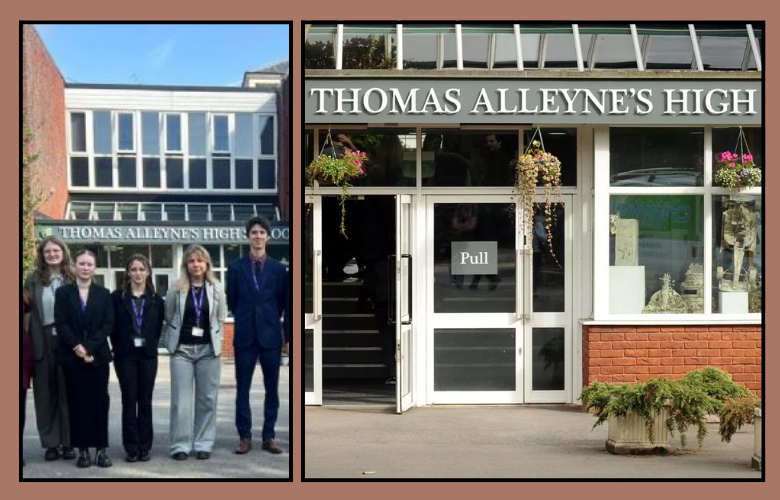
Thomas Alleyne Academy is a historic secondary school and sixth form in Stevenage, Hertfordshire, with a story stretching back more than four centuries. Founded in 1558 through the will of Thomas Alleyne, the school has developed from its origins as a grammar school into a modern academy serving students from Year 7 through sixth form.
Today, the academy combines its long-established heritage with a broad curriculum, careers guidance, enrichment activities and post-16 pathways. Its latest Ofsted inspection in October 2024 confirmed a Good overall judgement, while inspectors highlighted pupils’ positive attitudes, broad subject choices, careers guidance and opportunities beyond the classroom.
The History of Thomas Alleyne Academy
Thomas Alleyne Academy was founded in 1558, the year Thomas Alleyne died. Alleyne was the rector of Stevenage and, through his will, left money that helped establish three schools, including the school on the present Stevenage site.
The institution has operated under different names throughout its history. It was originally known as Master Allen’s School before becoming Alleyne’s Grammar School.
The school later merged with the former Stevenage Girls’ School, after which it adopted the name The Thomas Alleyne Academy. In 2013, it became an academy in partnership with the Hart School Trust.
One of the academy’s distinctive features is its location. The school remains on the site it has occupied for roughly four and a half centuries, giving modern students a direct connection with Stevenage’s educational history.
Thomas Alleyne and the School’s Legacy
The story behind the academy is closely connected to Thomas Alleyne himself. His decision to leave money for education created a legacy that extended beyond Stevenage, with schools also established at Uttoxeter and Stone in Staffordshire.
That connection makes Thomas Alleyne Academy more than a conventional modern secondary school. Its identity is shaped by the idea that education can create opportunities for future generations.
The academy also has notable figures within its history. One former headteacher was Francis Cammaerts, who led the school from 1952 to 1961 and had served as an agent of the Special Operations Executive during the Second World War.
Academic Approach at Thomas Alleyne Academy
The academy aims to provide a curriculum that is broad, balanced and relevant to students’ educational needs. It places particular emphasis on literacy and numeracy while helping students understand how their education connects with future careers.
Students are encouraged to develop subject knowledge and independence as they progress through secondary education. Curriculum maps are available across a wide range of departments, helping students and parents understand what is taught during each stage of the GCSE journey.
The academy also places importance on character development. Its approach is designed to help students build qualities that can support them both academically and beyond school.
Subjects and Curriculum
Students in the early secondary years study a broad selection of subjects. Year 7 provision includes:
- English
- Mathematics
- Science
- History
- Geography
- Computer Studies
- Spanish
- Art
- Music
- Drama
- Physical Education
- Religious Education
- Design and Technology
- Hospitality and Catering
- Personal, Social, Health Education
The curriculum becomes increasingly specialised as students progress towards GCSEs. The academy offers both academic and vocational options, allowing students to select subjects that fit their interests and future ambitions.
GCSE Options and Student Choices
Year 9 is an important stage for students because it is when they begin selecting their GCSE options. Thomas Alleyne provides guidance to help students make informed decisions rather than simply choosing subjects based on short-term preferences.
The academy’s current options information includes academic and vocational pathways. This gives students opportunities to build combinations of subjects suited to different university courses, apprenticeships and career destinations.
The school also provides curriculum information for subjects such as business studies, computer science, digital creative media, design and technology, drama, English, geography, history, mathematics, science and music.
Home Learning and Independent Study
Independent learning is an important part of the academic experience.
For Years 7 and 8, individual home-learning tasks are generally designed to take between 30 and 45 minutes, increasing to approximately 30 to 60 minutes in Year 9. Students access information about their assignments through Google Classroom.
At GCSE level, the expected workload increases, with individual home-learning tasks generally taking around 45 to 60 minutes. Students receive regular work across core and option subjects.
Sixth form students have a substantially greater independent-study expectation, with the academy stating that students receive approximately 4.5 hours of work per subject each week.
Thomas Alleyne Sixth Form
The sixth form is one of the academy’s most important post-16 pathways. It provides a mixture of A Levels and Level 3 vocational qualifications, giving students different routes towards university, apprenticeships and employment.
The academy has also worked with other Stevenage schools since 2019 to broaden the post-16 curriculum. The partnership enables students to access a wider selection of academic and vocational courses than would necessarily be available through one school alone.
This approach is particularly useful for students who want a specific subject or qualification that is not part of their home school’s standard sixth form timetable.
A Level Subjects at Thomas Alleyne
The sixth form offers a broad range of subjects. Its published subject information includes areas such as:
- Biology
- Chemistry
- Physics
- Mathematics
- History
- Psychology
- Sociology
- Health and Social Care
- Sport
Students can study A Levels exclusively or combine A Levels with BTEC courses, depending on their chosen pathway and eligibility.
Because course availability and entry requirements can change between academic years, prospective students should check the academy’s latest sixth form prospectus and admissions information before applying.
Sixth Form Entry Requirements
Admission to sixth form is not simply automatic progression from Year 11. Students must meet the relevant academic requirements for their chosen Level 3 pathway.
The academy states that most subjects have specific entry criteria, with some courses requiring grades above a standard grade 4. Applicants are also encouraged to discuss their intended pathway and career destination with the sixth form.
The school accepts applications from both existing Year 11 students and students transferring from other schools. The academic entry requirements apply to internal and external applicants.
Study Skills and Enrichment
One of the distinctive features of the sixth form is its study-skills and enrichment programme.
Students receive supervised study-skills sessions designed to help them become more independent and effective learners. The programme is intended to support the transition from GCSE study to the greater independence expected at post-16 level.
Sixth form students can also contribute to the wider school community through activities such as student leadership, supporting younger students and volunteering in lessons or homework clubs. The academy says these experiences can also help students develop skills relevant to university and employment applications.
University, Apprenticeship and Career Preparation
Post-16 education at Thomas Alleyne is not focused solely on examination results. The academy places emphasis on students understanding their potential destinations and developing the skills required for their next stage.
Careers guidance was specifically recognised in the academy’s October 2024 Ofsted inspection. Inspectors noted the school’s links with local colleges, employers and charities and said this helped students receive high-quality advice about future opportunities.
The sixth form also focuses on progression to university, higher apprenticeships and employment. According to the academy, all students in the 2025 cohort achieved grades that enabled them to progress to their chosen university or a high-level apprenticeship programme.
Ofsted Rating and What It Says About the School
The Thomas Alleyne Academy’s latest published Ofsted inspection took place on 15 and 16 October 2024. The school was judged Good overall.
The inspection report said pupils, including sixth form students, were positive about school life. Inspectors highlighted the range of subjects, clubs and enrichment opportunities, as well as careers guidance and links with external organisations.
The report also noted that most pupils enjoy their learning, behaviour routines are consistently applied and the pastoral team provides support when students need help or guidance.
These findings provide useful context for parents considering the academy because they offer an independent assessment alongside the information published by the school itself.
What Makes Thomas Alleyne Academy Different
The academy has a combination that is unusual among modern secondary schools: a long historical legacy alongside contemporary academic and vocational provision.
Its main strengths include:
- More than 450 years of educational history
- A broad secondary curriculum
- Academic and vocational GCSE choices
- A dedicated sixth form
- A combination of A Levels and Level 3 vocational courses
- Partnerships with other Stevenage schools
- Careers and progression guidance
- Study-skills and enrichment opportunities
- A wide range of extracurricular activities
- A focus on character development
This combination means students can follow different routes according to their academic strengths, interests and future plans.
Is Thomas Alleyne Academy a Good Choice?
For families looking at secondary schools in Stevenage, Thomas Alleyne Academy offers a mixture of established history and modern educational opportunities.
Its latest Ofsted judgement is Good, and inspectors reported positively on areas including learning, behaviour, pastoral support, careers guidance and enrichment.
For students considering sixth form, the range of A Levels and vocational qualifications is another important factor. The partnership with other Stevenage schools can also broaden the post-16 choices available.
Ultimately, whether it is the right school depends on a student’s individual needs, preferred subjects, travel arrangements and future ambitions. Prospective families should review the latest admissions information, curriculum details and sixth form requirements before making a decision.
Thomas Alleyne Academy Admissions
The academy publishes separate admission arrangements for different academic years. Its current website includes information for 2026/27 as well as determined arrangements for 2027/28, including separate sixth form admission policies.
For students entering Year 7 in September 2026, the academy states that the first day of term is 3 September 2026. The school also provides transition activities to help new students prepare for secondary education.
Because admission policies and deadlines can change, families should always consult the latest official arrangements rather than relying on older school information.
ALSO RAED:Lewisham Shopping Centre Redevelopment Plans Transform the Future of South East London
Frequently Asked Questions
When was Thomas Alleyne Academy founded?
Thomas Alleyne Academy was founded in 1558 through the will of Thomas Alleyne, the rector of Stevenage.
Where is Thomas Alleyne Academy?
The academy is located on High Street, Stevenage, Hertfordshire, SG1 3BE.
Does Thomas Alleyne Academy have a sixth form?
Yes. The academy has a sixth form offering a range of A Levels and Level 3 vocational programmes.
What subjects can students study in the sixth form?
Published sixth form subjects include Biology, Chemistry, Physics, Mathematics, History, Psychology, Sociology, Health and Social Care and Sport, alongside other options and vocational courses.
What is Thomas Alleyne Academy’s Ofsted rating?
The academy is currently listed by Ofsted as Good, following its inspection in October 2024.
Can students from other schools apply to the sixth form?
Yes. Thomas Alleyne accepts applications from students transferring from other schools, and the academy states that academic entry requirements apply to both internal and external applicants.
What makes the school historically significant?
The academy traces its foundation to 1558 and remains on the site it has occupied for around four and a half centuries. Its history is directly linked to Thomas Alleyne’s charitable legacy and the development of education in Stevenage.
Conclusion
Thomas Alleyne Academy brings together a remarkable historical legacy and a modern approach to secondary and post-16 education. Founded in 1558, the Stevenage school has changed significantly over the centuries while retaining its connection with the original educational vision of Thomas Alleyne.
Today, students have access to a broad curriculum, GCSE academic and vocational options, a varied sixth form and opportunities for independent learning, enrichment and career development. Its latest Ofsted inspection rated the academy Good and highlighted positive aspects of school life, including learning, behaviour, pastoral care, careers guidance and extracurricular opportunities.
For families researching Thomas Alleyne Academy, its combination of history, academic choice and sixth form progression makes it an important secondary education option in Stevenage. The most reliable way to assess current courses and admissions, however, is to check the academy’s latest official information because subjects, requirements and arrangements can change from one academic year to another.
