

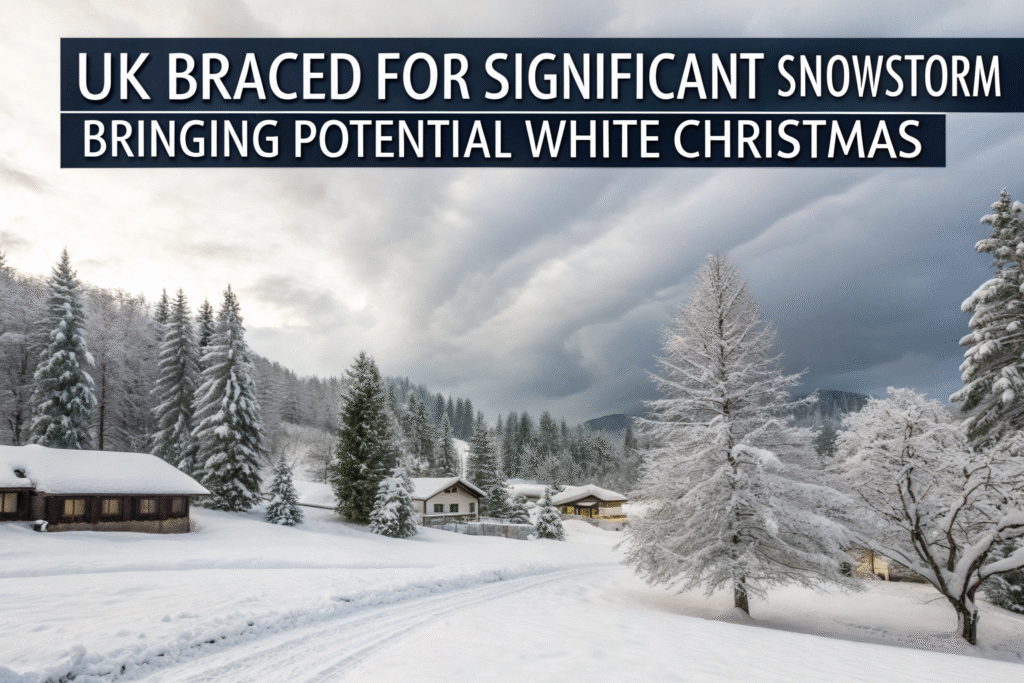
The UK is braced for significant snowstorm bringing potential white Christmas as forecasters predict a surge of Arctic air colliding with moisture-laden Atlantic systems. Northern and high-altitude regions are expected to bear the brunt, with Scotland, northern England, and upland Wales most at risk for heavy snowfall. Residents are being advised to prepare for icy roads, travel disruption, and potential infrastructure challenges as the storm approaches. While widespread snow across the UK is uncertain, picturesque snow-covered landscapes in high-risk regions could make this year’s Christmas truly memorable. Meteorologists emphasize that localized variations in wind, temperature, and precipitation will determine the extent of snowfall and its longevity on the ground. Public anticipation for a snow-laden festive season is growing, with many hoping for a classic white Christmas experience.
What is the UK Braced for Significant Snowstorm Bringing Potential White Christmas?
This winter, the UK is witnessing a rare combination of weather systems that have increased the likelihood of snowfall. Arctic air descending from the north meets Atlantic moisture-laden fronts, creating ideal conditions for snow in northern and high-elevation areas. The Met Office has issued alerts, warning that this snowstorm could affect daily life, travel, and emergency services. Authorities are preparing to deploy gritting teams, monitor power infrastructure, and issue safety warnings, ensuring communities can respond quickly to hazardous conditions. Residents are encouraged to follow forecasts closely, stock essential supplies, and prepare for both short-term disruptions and potential longer-term impacts. This complex meteorological setup underlines why the UK is braced for significant snowstorm bringing potential white Christmas conditions this year.
Meteorological Setup: How Cold Air Meets Moisture
The formation of this snowstorm results from the convergence of cold Arctic air, high-pressure systems over Europe, and low-pressure fronts moving in from the Atlantic. Cold, dense air near the surface increases the likelihood that precipitation will fall as snow rather than rain. Wind patterns are crucial in determining where snow accumulates, especially in exposed or hilly areas. The Met Office highlights that when these conditions align, snow accumulation can be substantial, particularly in northern regions. Lowland areas may experience lighter snow or sleet, but northern and high-altitude areas are expected to have lasting snow cover. This setup explains why forecasters are urging residents to take winter safety measures seriously as the UK braces for significant snowstorm bringing potential white Christmas events.
Regional Risk Assessment
Northern England and Scotland
Northern England and Scotland are forecasted to receive the heaviest snow, with upland areas potentially seeing 5–15 cm of accumulation. Roads and railways in these regions could face major disruption, and airports may experience delays or cancellations. Residents are encouraged to prepare vehicles for icy conditions, stock essential supplies, and remain updated on local forecasts. Emergency services are on high alert in these regions, particularly in areas prone to drifting snow or limited access. The combination of persistent cold and heavy precipitation makes these regions the most likely to experience a true white Christmas this year.
Midlands and Southern England
The Midlands and southern parts of England are likely to experience lighter snowfall, with precipitation possibly falling as sleet or freezing rain. Urban centers may see very limited accumulation due to heat retention from buildings and roads. However, icy patches and minor snow accumulation could still disrupt travel and outdoor activities. Sudden temperature drops or localized snow showers may create temporary winter conditions in some areas. While the probability of a white Christmas in these regions is lower, residents should remain cautious and follow official weather updates.
How Likely is a White Christmas This Year?
Defining a White Christmas
The Met Office defines a white Christmas as at least one snowflake falling at an observation station on December 25. While snow lying on the ground is rarer, northern and highland areas have a higher chance of experiencing lasting snow cover this year. Localized snowfall may be sufficient to create classic festive winter imagery, even if lowland regions remain largely snow-free. Historical data shows that northern areas are more prone to snow during Christmas, which supports current forecasts. Understanding these probabilities allows residents to plan realistically while hoping for a snow-covered festive season.
Historical Context
Since 1960, widespread snow lying on Christmas morning has occurred only a few times, including 1981, 1995, 2009, and 2010. Northern England and Scotland are historically the most likely areas to see a white Christmas. This year’s forecast aligns with historical patterns, with Arctic air and persistent Atlantic fronts creating favorable conditions for snow in these regions. Historical trends help forecasters and residents assess risks and prepare for the possibility of a snow-laden Christmas.
Potential Impacts of the Snowstorm
Travel Disruptions
This snowstorm could significantly affect transportation across the UK. Roads may become slippery due to black ice and snow accumulation, potentially causing accidents and delays. Rail services may experience disruption, particularly in hilly or exposed areas. Airports could face delays or cancellations if snowfall is heavy. Travelers are advised to plan ahead, check local transport updates, and consider remote working or alternative routes. Travel advisories from authorities will be critical during this period.
Infrastructure and Services
Rural areas are vulnerable to power outages if snow accumulates on trees or power lines. Emergency services may be stretched in remote and high-altitude locations. Local councils are preparing gritting routes and issuing public safety warnings. Residents should ensure heating systems are functional and essential supplies are available. Effective preparation and timely response are crucial as the UK braces for significant snowstorm bringing potential white Christmas impacts.
Household Preparation Tips
Residents should take proactive steps to ensure safety during this snowstorm. Winter preparation should include checking heating systems, stocking food and medications, and preparing emergency kits with blankets, torches, and snow shovels. Community support, such as checking on vulnerable neighbors and responsibly clearing shared paths, is essential. Monitoring updates from the Met Office and local councils ensures households are informed of the latest warnings and advisories. Contingency plans for schools, businesses, and families will help mitigate disruptions. Proper preparation allows residents to enjoy a potential white Christmas safely.
Factors That Could Prevent a White Christmas
Several variables could prevent heavy snowfall or lasting accumulation. Warmer air intrusions from the south could melt snow in lowland areas. Mixed precipitation, such as sleet or freezing rain, may replace snowfall, creating icy rather than snowy conditions. Geographical differences play a critical role, with low-lying regions far less likely to retain snow. Sudden temperature shifts or changes in wind patterns may alter snowfall distribution. These factors emphasize that while the UK is braced for significant snowstorm bringing potential white Christmas scenarios, uncertainty remains.
FAQs
Q1: When will the snowstorm hit the UK?
Forecast models indicate arrival within 48–72 hours in northern regions.
Q2: Which areas are most likely to see snow?
Northern England, Scotland, and upland areas in Wales are at highest risk.
Q3: Will there be a white Christmas everywhere in the UK?
Widespread snow is unlikely; only northern and high-altitude regions have higher chances.
Q4: How much snow could fall?
Accumulation estimates range from 2–15 cm in upland areas, less in lowland regions.
Q5: Will travel be disrupted?
Yes, particularly roads, rail services, and airports in heavy snow areas.
Q6: What safety measures should I take?
Prepare emergency kits, check heating, stock essentials, and avoid travel if possible.
Q7: Can climate change affect snow likelihood?
Yes, warmer winters may reduce the frequency of widespread snow, though localized storms are still possible.
Conclusion
The UK is braced for significant snowstorm bringing potential white Christmas, with northern and elevated regions most at risk of heavy snow. While widespread snow is uncertain, residents in affected areas can expect picturesque landscapes, icy conditions, and festive winter scenes. Careful monitoring of forecasts, preparation of homes, and adherence to safety measures will ensure communities can enjoy a potential white Christmas while minimizing disruption. Arctic air meeting moisture-laden fronts this season creates conditions that may result in one of the most memorable festive periods in recent years.
